
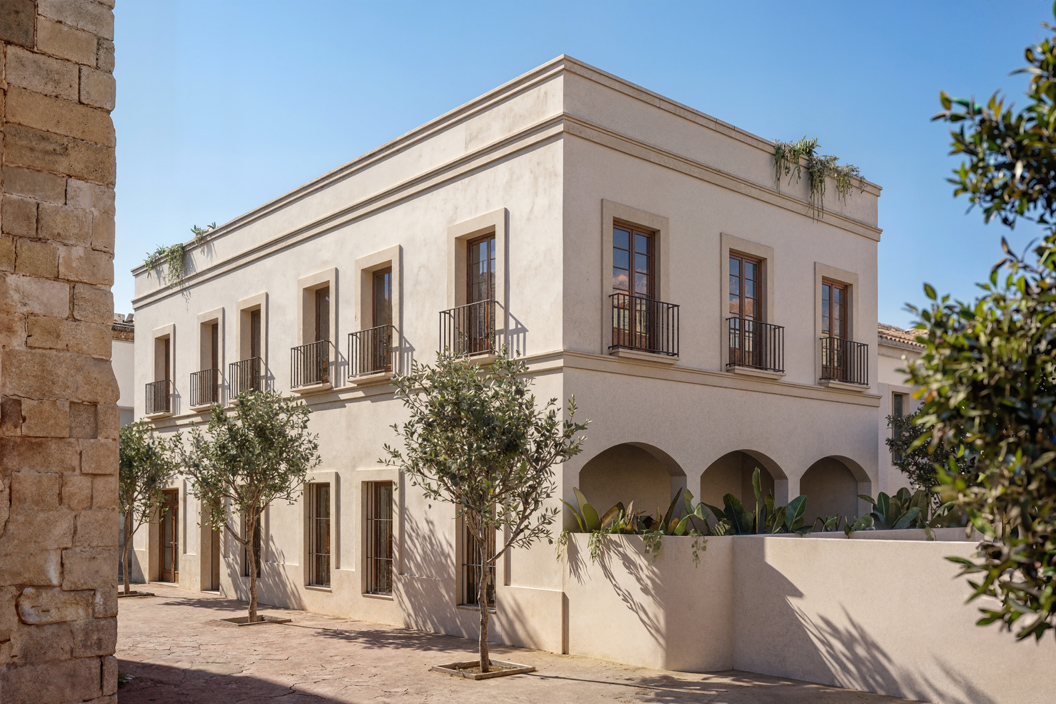
This City Center home embodies Casera’s approach to holiday home co-ownership in Southern Spain.
It was chosen for its setting, scale, and architectural character. The restoration builds on the existing structure and traditional proportions, using local materials to create a home that feels quietly contemporary while remaining rooted in place.
What follows is an overview of the home’s origins and Casera’s restoration approach, from material choices and planning principles to the individual spaces that shape how Co-Owners will live in the home:
- 1. Location & Origins
- 2. The Floor Plans
- 3. Materials & Mood
- 4. The Ground Floor: Living & Gathering
- 5. The First Floor: Private Quarters & Secondary Living
- 6. The Roof Terrace: Open-Air Living
- 7. About the Design Process
Location & Origins

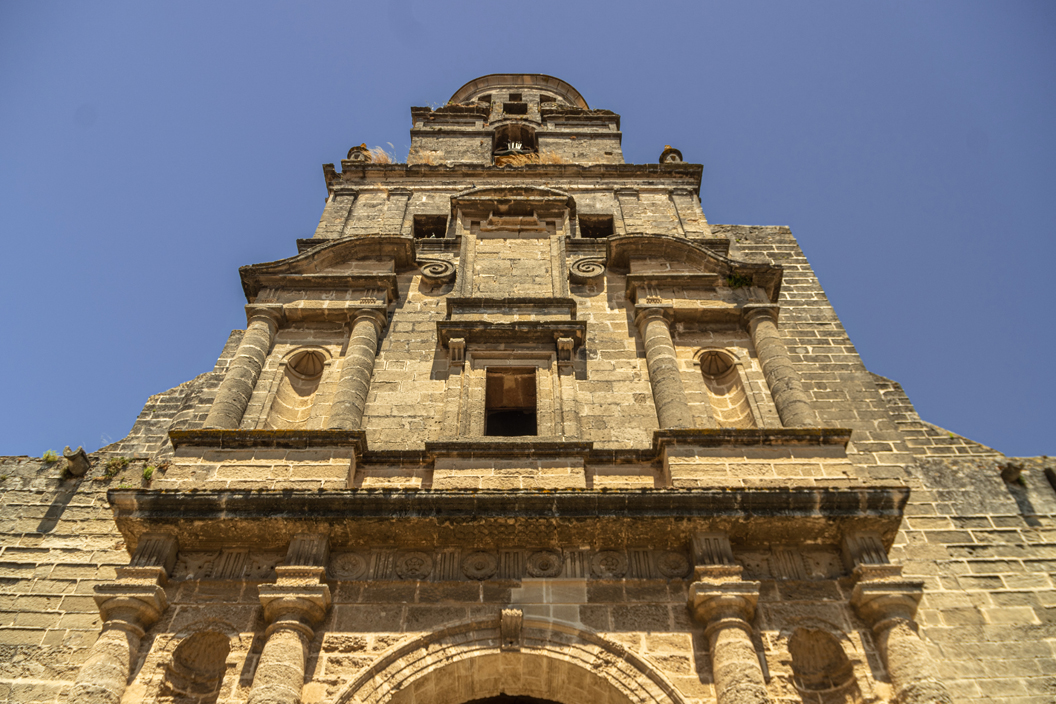
The home is set within the historic city center of Jerez de la Frontera beside one of the city’s oldest landmarks.
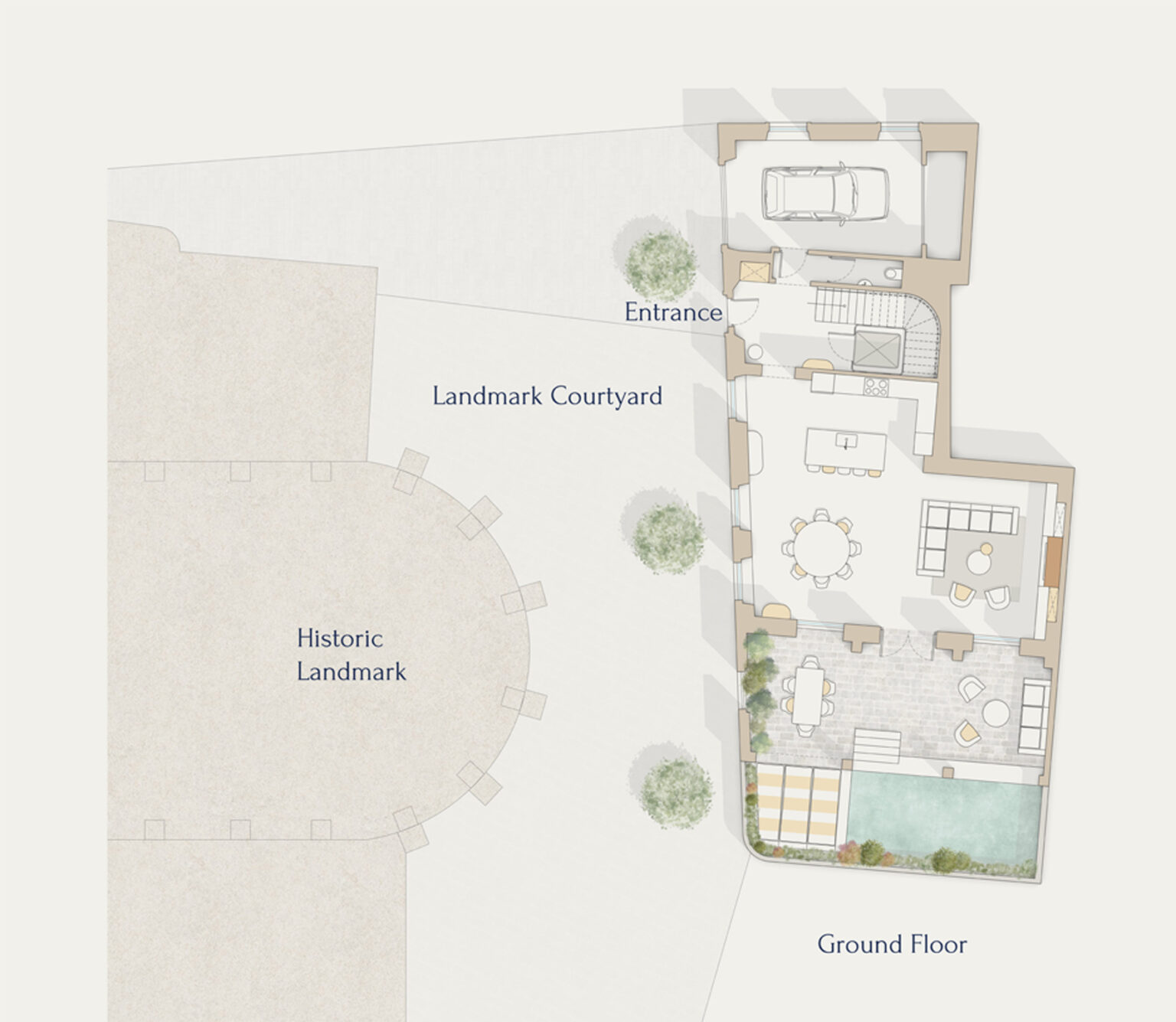
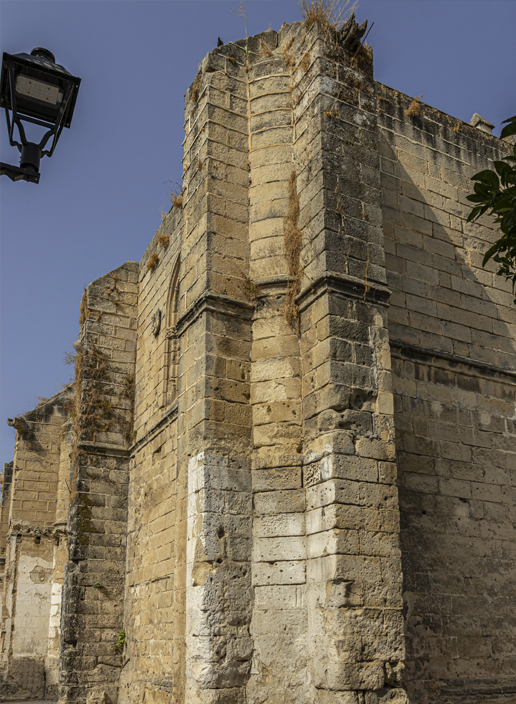
Its entrance opens onto a shared courtyard that wraps around a medieval church dating back to the 13th century and shaped by centuries of architectural evolution.
While formal records of the home’s original construction are limited, the building is understood to date to the early 19th century, around 1820. What is unmistakable is its long-standing integration into the fabric of the neighbourhood. The house does not sit beside the centuries-old landmark so much as it lives with it. From the terrace pool, the front façade windows, and the rooftop, views are consistently framed by the original stone walls, placing the home in constant dialogue with one of the city’s oldest structures.

The Floor Plans


With nearly 300 square metres of interior space and 200 square metres of exterior living, the home is designed to comfortably sleep twelve while accommodating larger groups for gathering and shared use.
Generous original ceiling heights allow the house to breathe vertically, while the installation of an elevator connecting all three levels ensures ease of access throughout. The property also includes a private garage, a practical rarity in the historic city center.
Planned as a sequence of distinct yet connected environments, each floor serves a clear purpose while contributing to a cohesive whole.
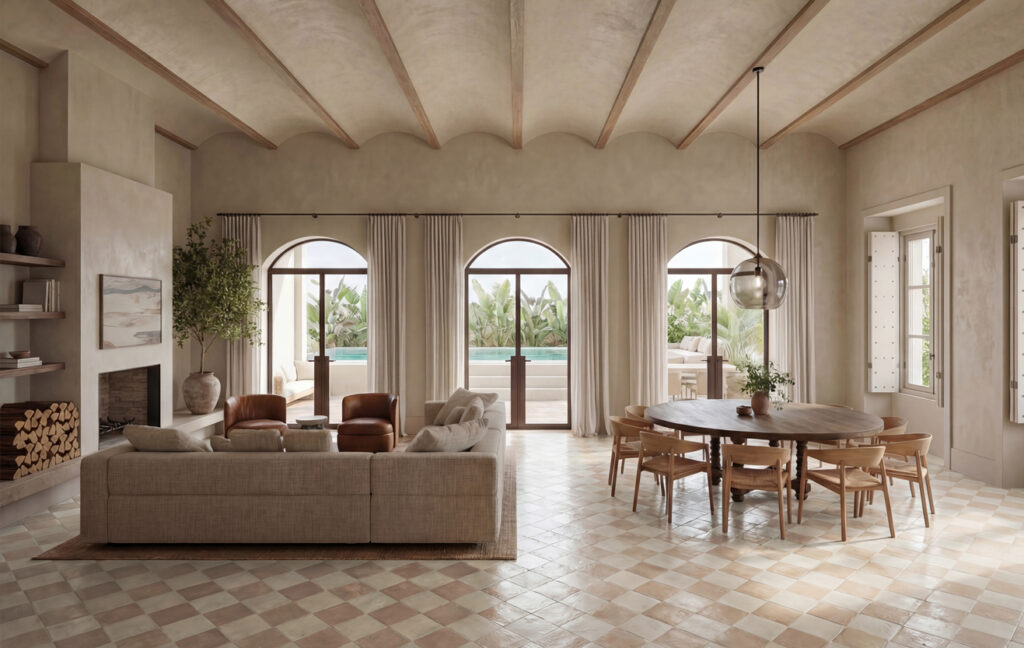
- The ground floor is conceived as the social heart of the home. Designed to take full advantage of Jerez’s mild climate, the main salon opens directly onto the terrace and dip pool, allowing indoor and outdoor spaces to function as one. This level includes a generous kitchen, a large round dining table, and a living area anchored by a fireplace – spaces intended for long lunches, evenings in, and time spent between indoors and out.
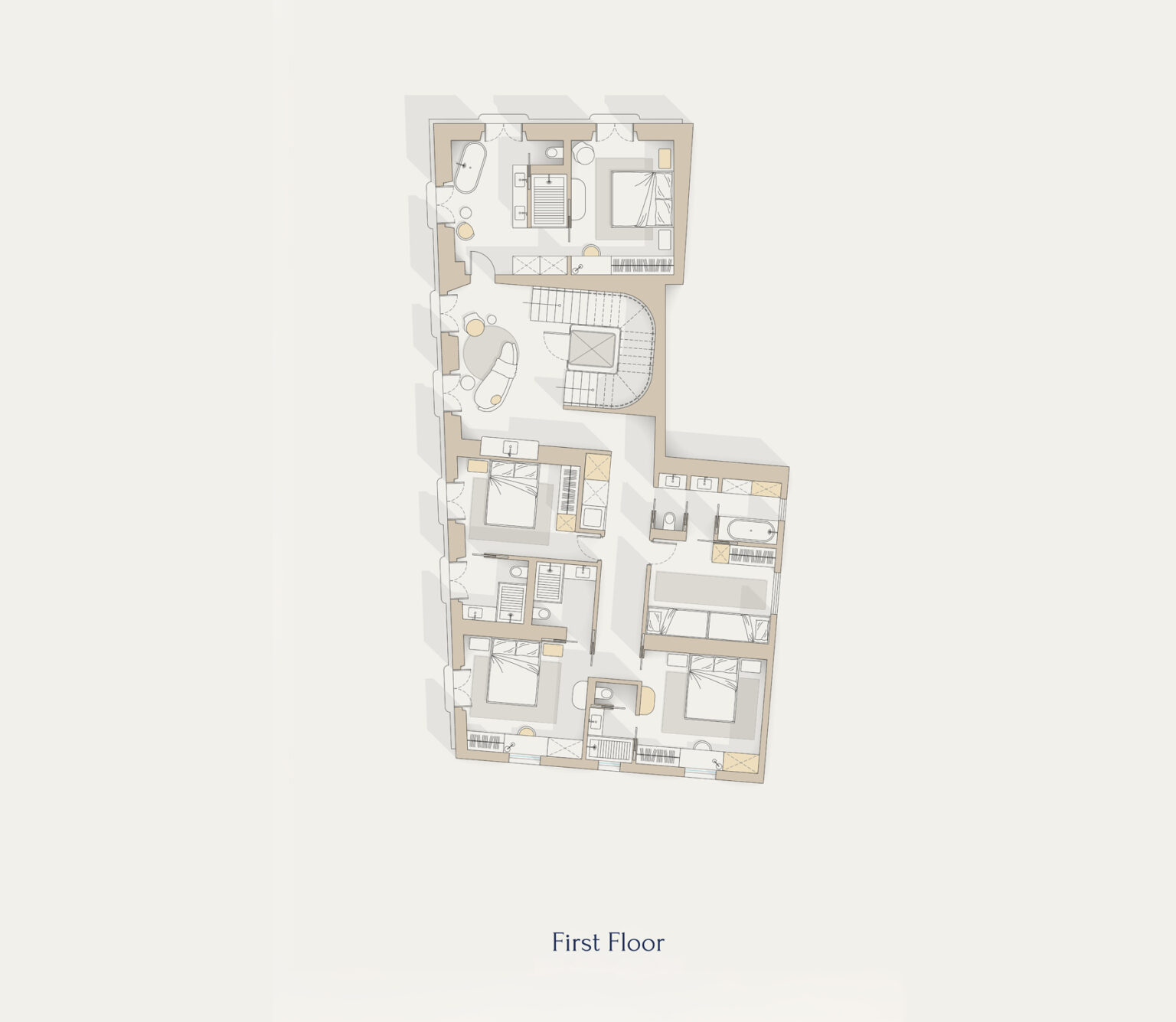
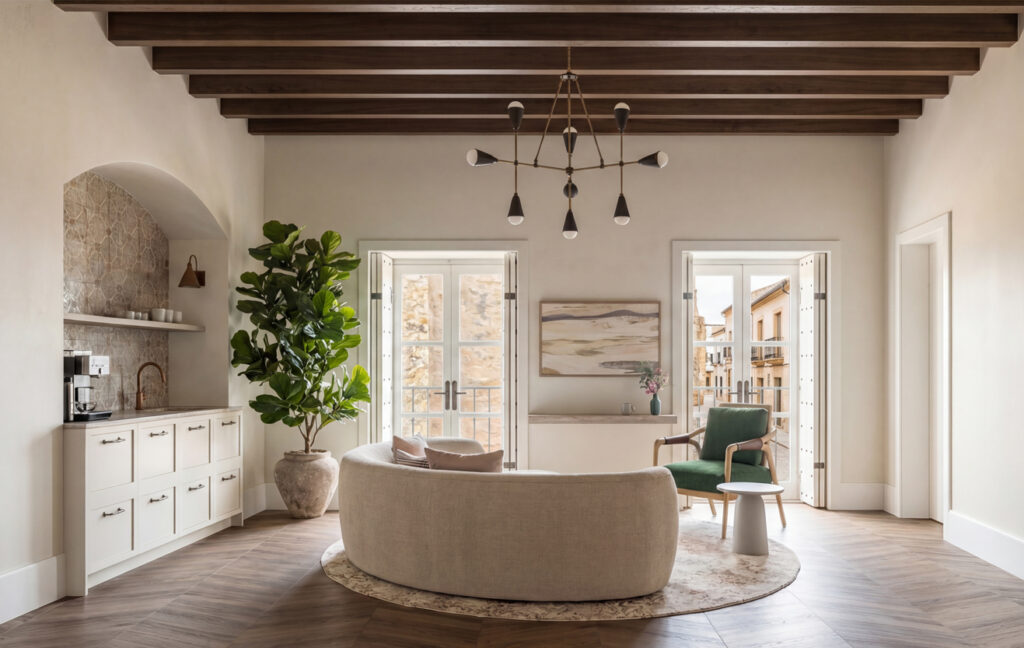
- The first floor is dedicated to rest and retreat. It includes a primary bedroom, three guest bedrooms, and a bunk room for four, each with its own en-suite bathroom. A secondary living area with a coffee bar provides a quieter counterpoint to the ground floor salon – equally suited to children’s movie nights, a solo morning coffee, or an unhurried nightcap.
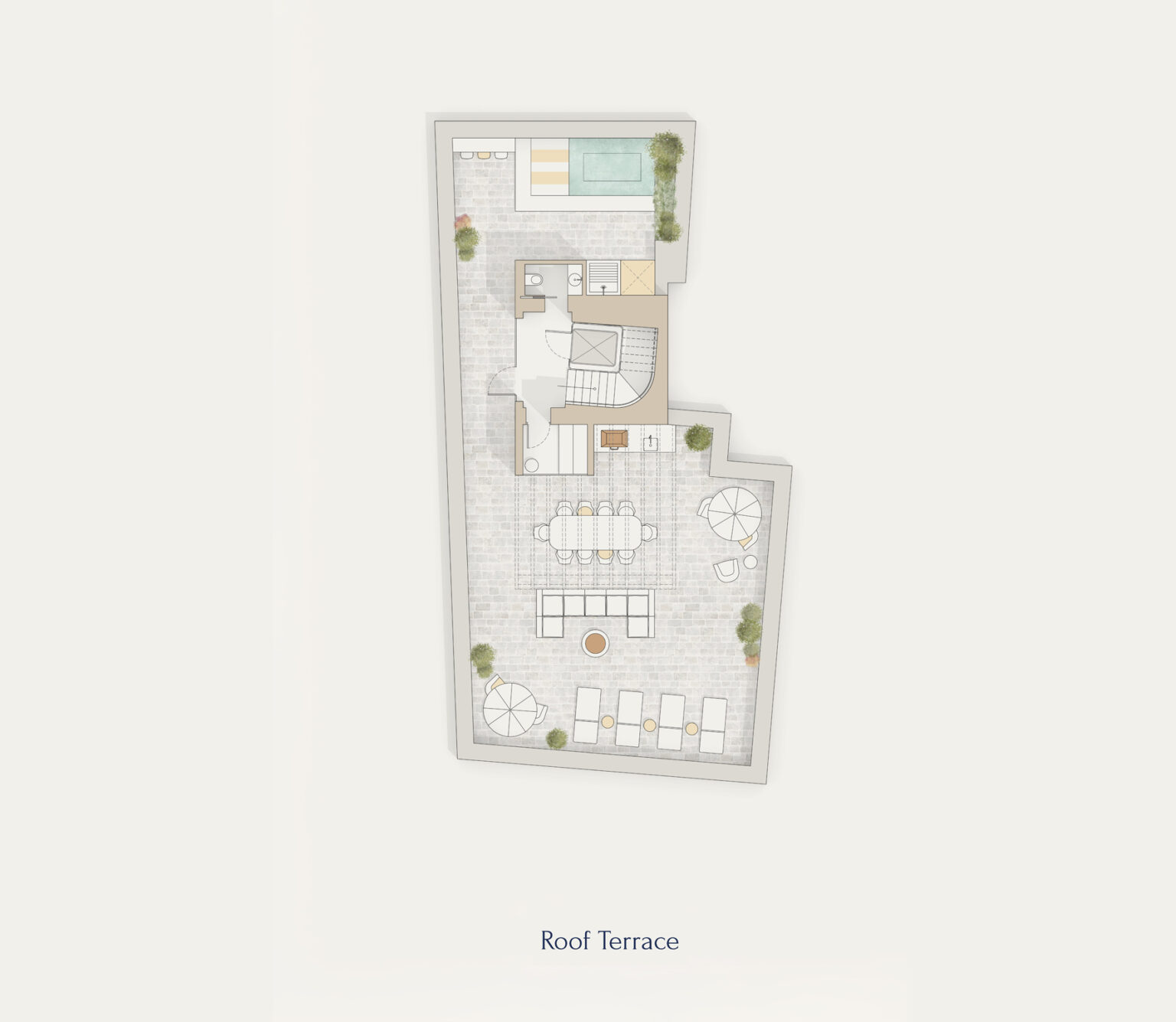
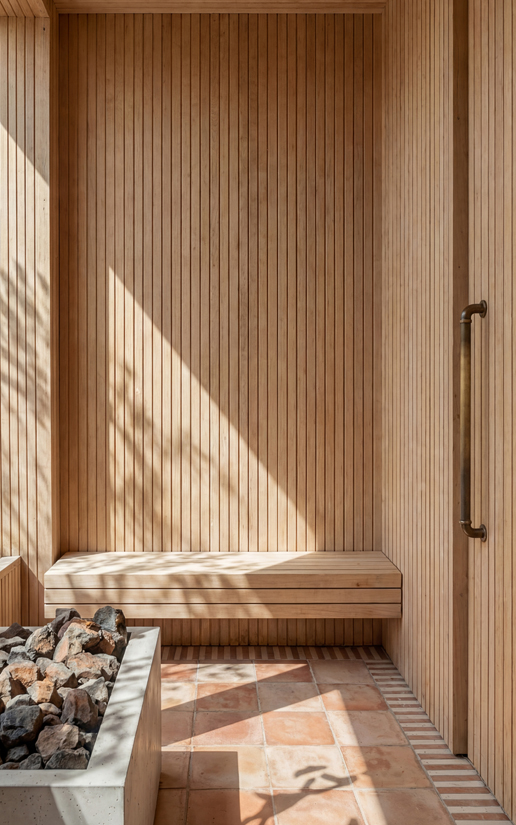
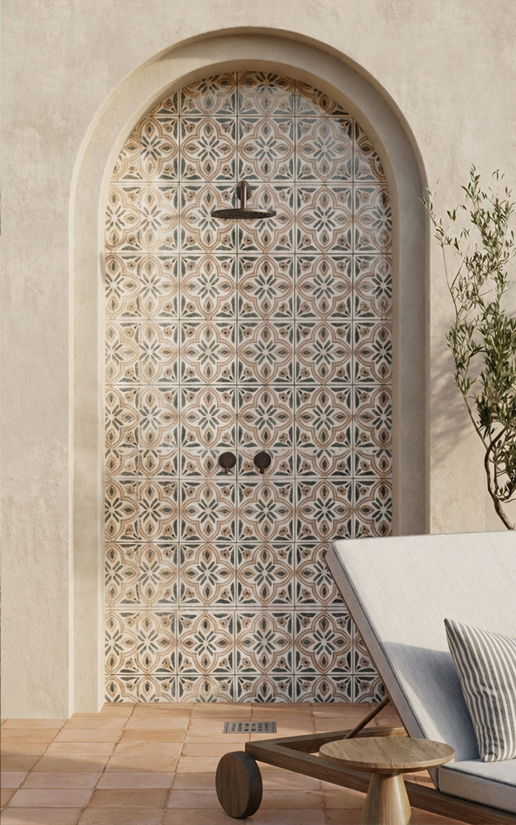
- The roof terrace is designed as an elevated outdoor living space. It includes an outdoor kitchen and grill, a generous dining area, sun-lounging zones, and a spa area with sauna and outdoor shower, intended for both everyday use and larger gatherings.
Materials & Mood

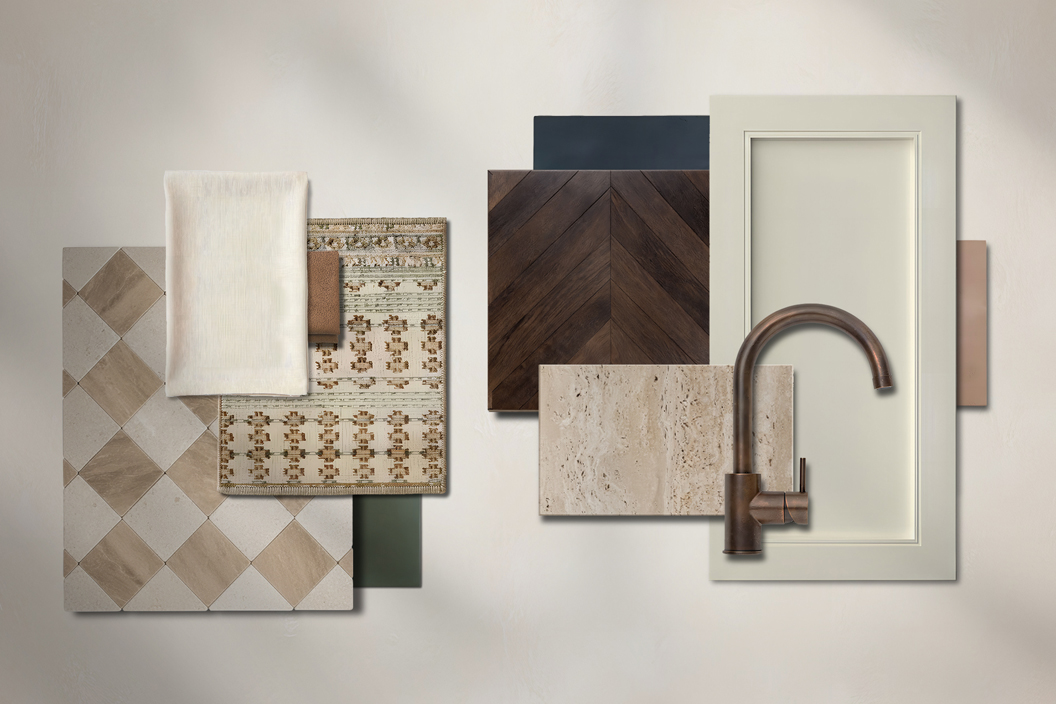
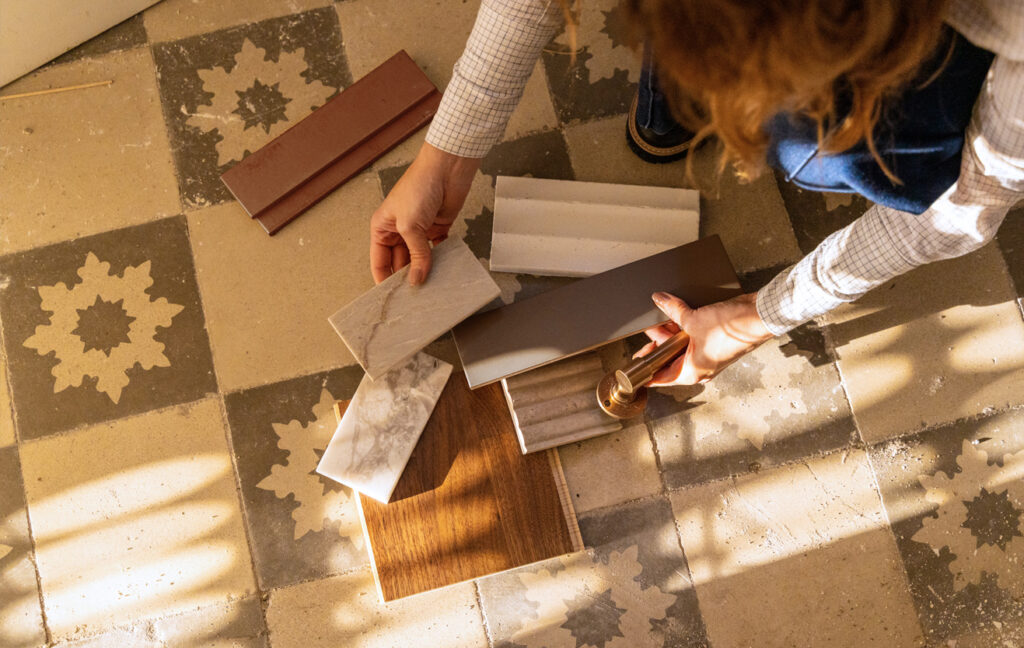
Natural materials shape the atmosphere of the house.
Stone, wood, and woven textures introduce warmth and depth, allowing the architecture to remain understated and composed. A restrained palette of mineral tones establishes continuity across spaces, with texture providing quiet variation. The intent is not decoration, but balance, materials that feel rooted, familiar, and enduring.

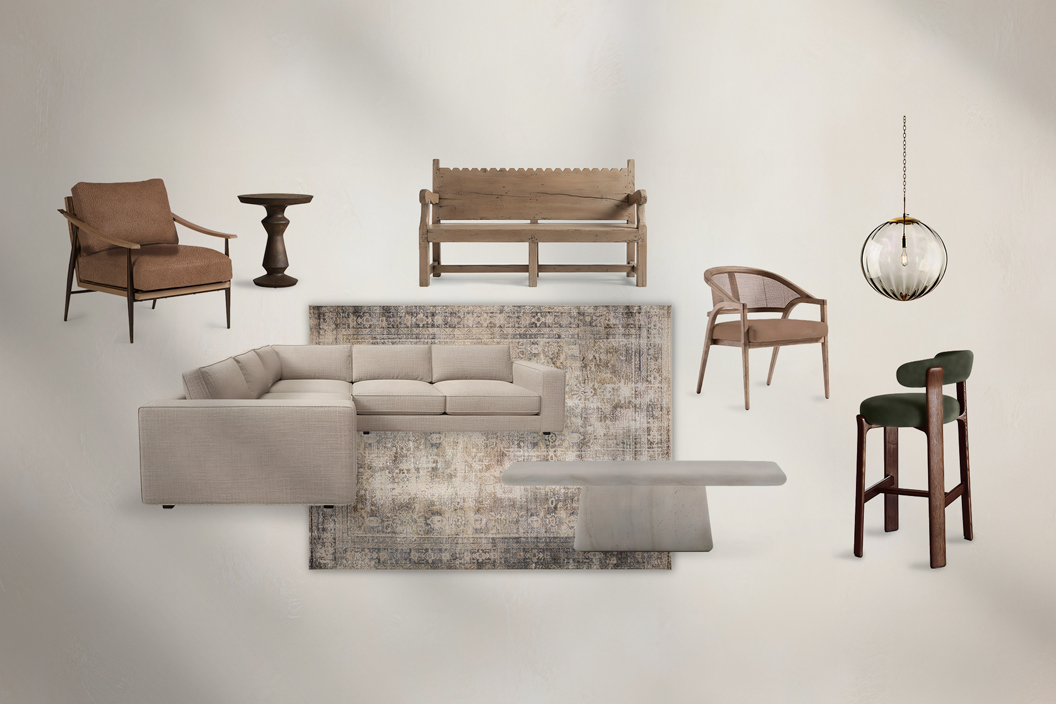
The furniture shown offers a reference for the interior mood. Contemporary forms sit alongside restored and heritage influences, selected for comfort, longevity, and a sense of permanence rather than trend.
The Ground Floor: Living & Gathering
Arrival Space
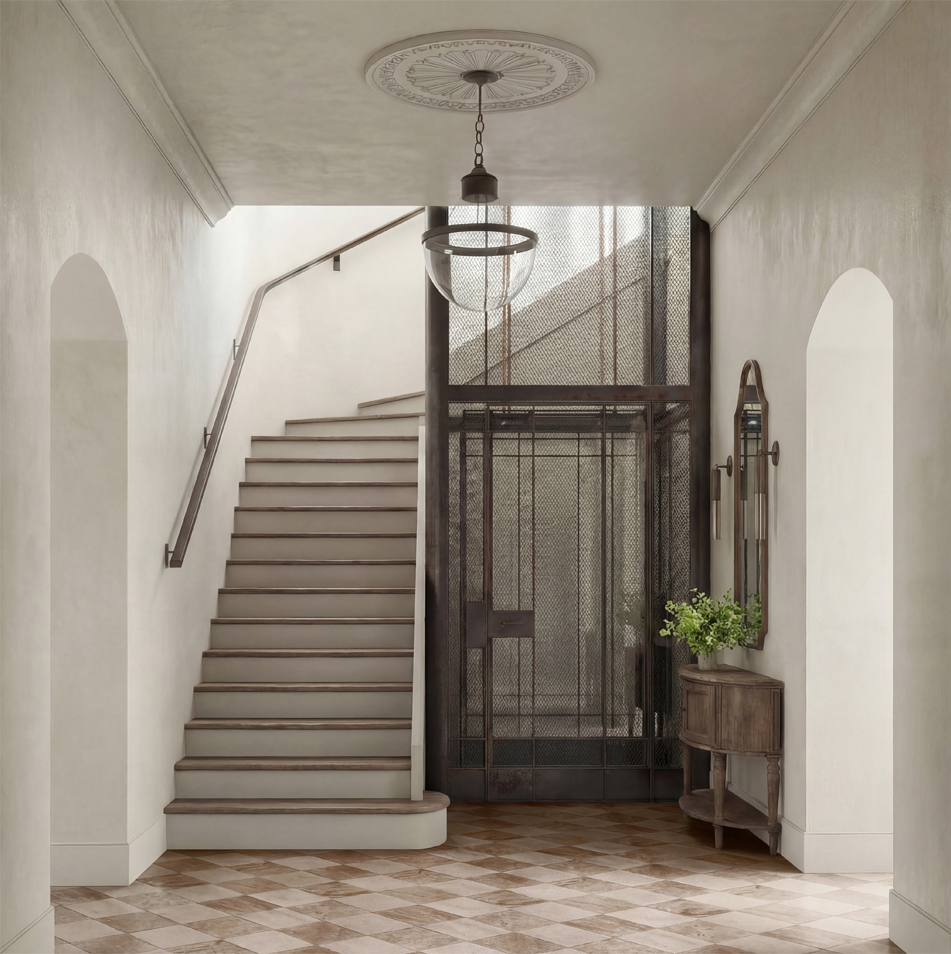
The arrival space acts as a moment of transition from the street, where the home’s scale and material language are introduced. It connects the stair, elevator, garage, and powder room to the main living areas.
Kitchen
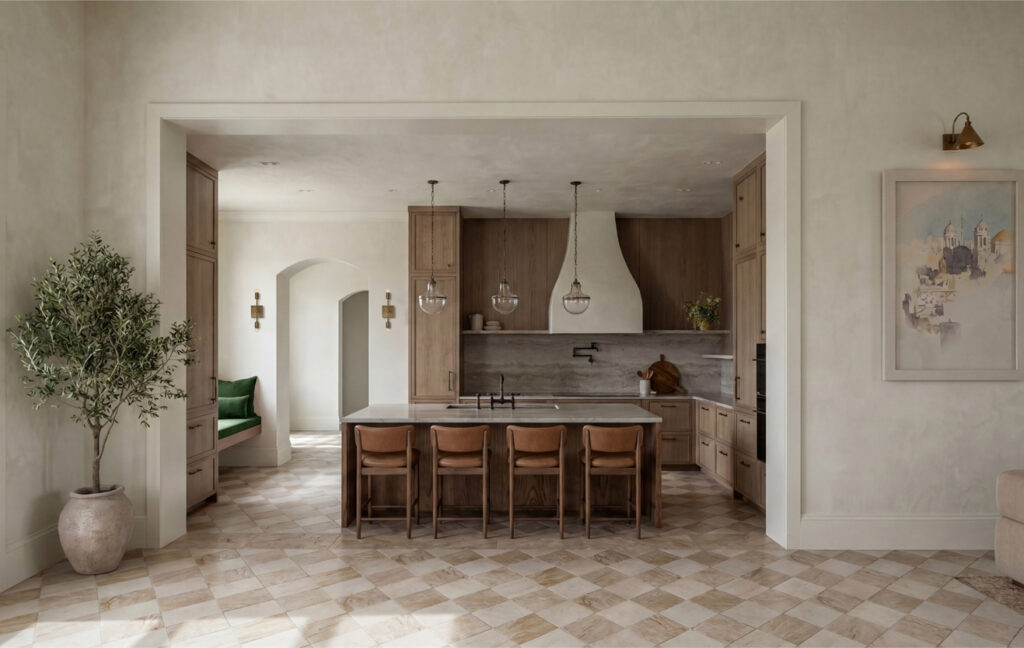
The kitchen is conceived as an open, functional space designed to support both everyday use and larger gatherings. Positioned in direct relationship to the dining area and salon, it includes dual ovens and dishwashers, along with a dedicated beverage refrigerator, allowing it to operate with ease when the home is fully occupied.
Dining & Salon
The dining area and salon form a continuous living space, organized around proportion, light, and circulation. A large round dining table serves as the center for everyday meals, while the salon is arranged for relaxed gathering and evenings by the fireplace. Large openings connect the
space directly to the terrace, allowing daily activities to flow between interior and exterior.
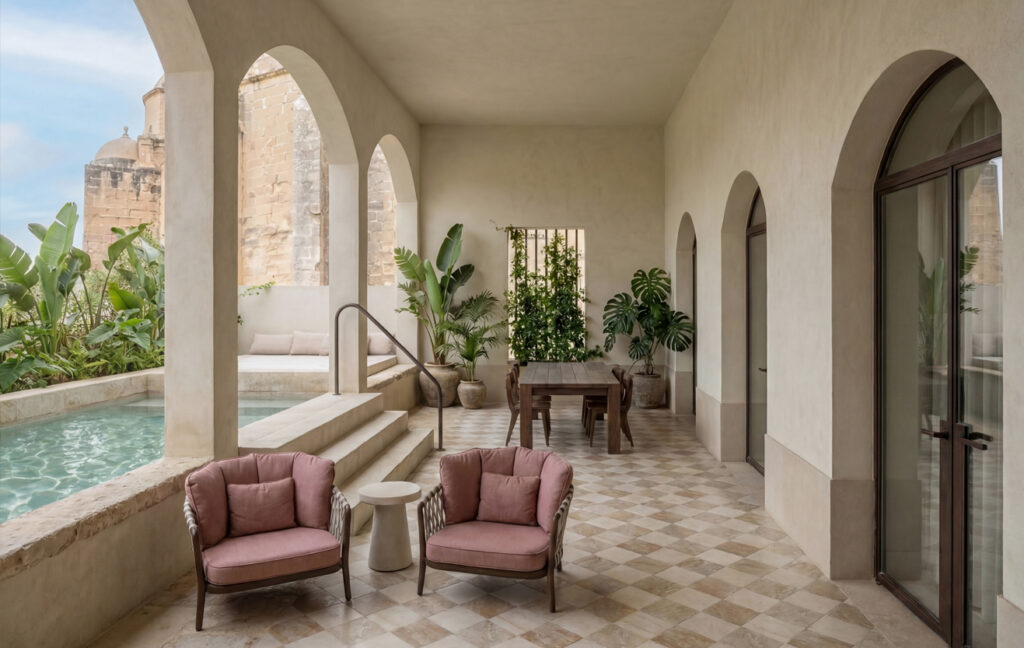
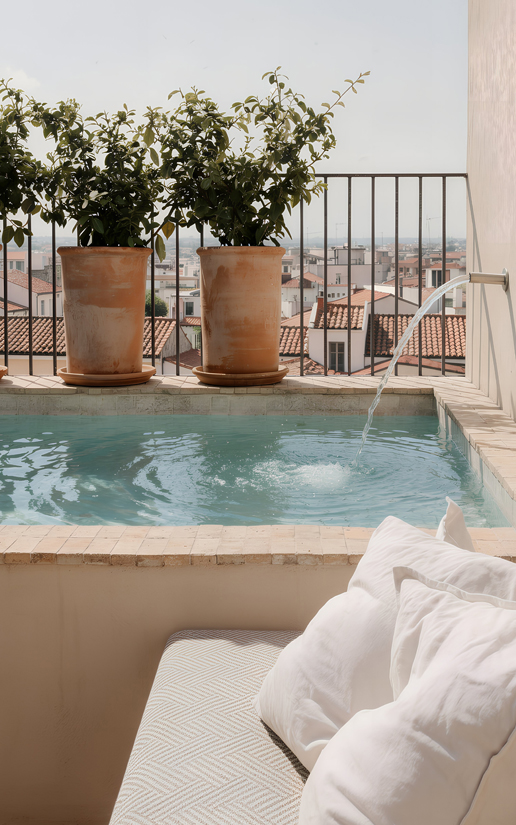
Terrace & Dip Pool
Directly connected to the dining area and salon,
the terrace extends the ground floor outdoors.
Lounge seating and an outdoor dining area are
shaded beneath the cantilevered first floor,
creating a generous four-meter (16-foot) ceiling
height.
The dip pool and sunbathing platform remain
open to the sky, with upward views defined by the stone presence of the neighboring landmark.
The First Floor: Private Quarters & Secondary Living
Secondary Salon &
Coffee Bar
The secondary salon provides a quieter living space, offering a place of retreat separate from the main gathering areas
below.
Organized around a secondary coffee point, the space is equipped with a built- in refrigerator and dishwasher, allowing it to function independently from the main kitchen.
A television is integrated to function as framed artwork when not in use, allowing the space to remain visually calm.
Located adjacent to this area, the laundry is discreetly integrated, with convenient proximity to all bedrooms.
Primary Bedroom
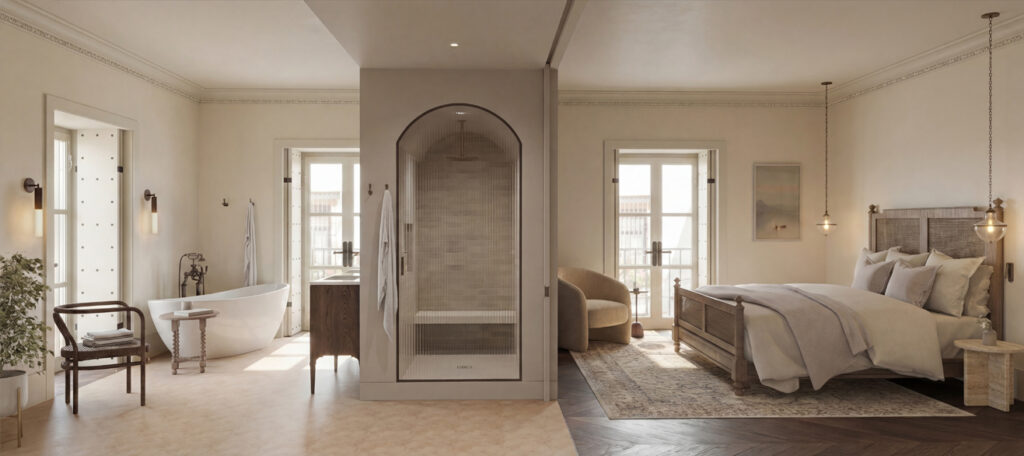
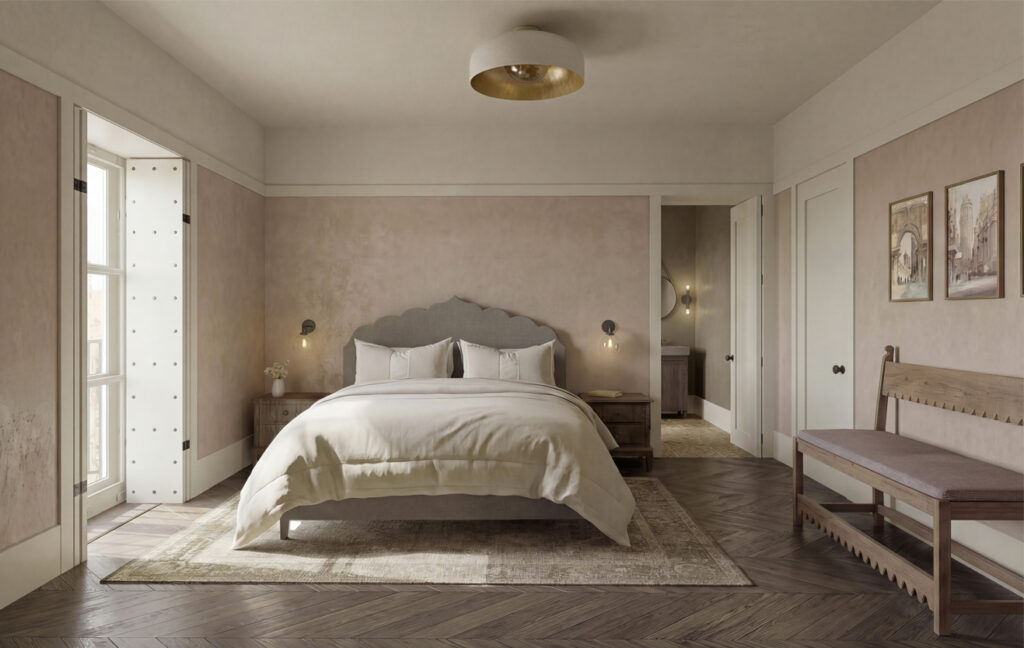
The primary bedroom is organized as a sequence of spaces, beginning with a spa-like bathroom. Upon entry, the space opens into a generous volume containing a bathtub, lounge chair, and dual vanity with the WC discreetly enclosed.
A central architectural volume houses both the enclosed WC and the shower, while also acting as a spatial buffer between the bathing and sleeping areas. A pocket door allows the two zones to be separated when desired, maintaining privacy without compromising openness.
The space includes a king-size bed, a dedicated remote work station, and approximately 3.75 linear metres (12 linear feet) of built-in wardrobe space.
Plan shown to clarify the spatial sequence.
Guest Rooms
The home includes three guest rooms, each designed as a comfortable and self- contained retreat. All are fitted with queen-size beds and en-suite bathrooms, allowing guests a consistent level of privacy.
While similar in layout, each room is treated individually, with variations in finishes, artwork, and detailing to give
each space its own character. Built-in wardrobe storage of at least two linear meters (6.5 linear feet) is provided in each
room, supporting extended stays. Two of the guest rooms also include dedicated
remote work stations.
Bunk Room
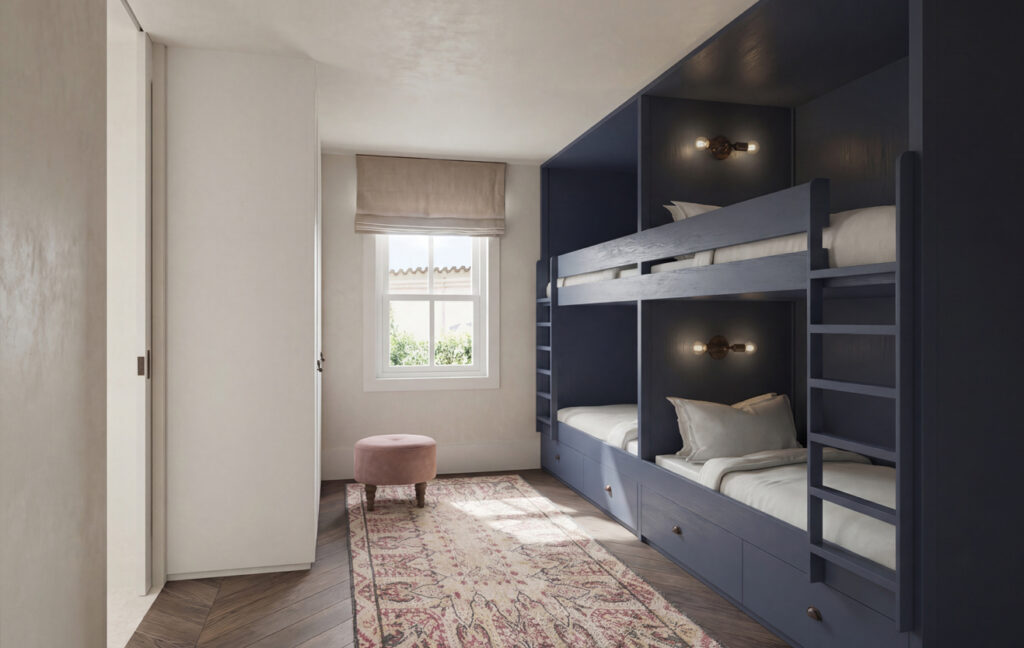
More than just a children’s space, the bunk room is designed as a flexible
sleeping environment for shared use, accommodating additional guests with the same level of comfort and consideration as the other bedrooms.
Built-in bunks provide sleeping for four, with proportions, finishes, and detailing treated with the same care as elsewhere in the home.
The adjoining bathroom is planned for simultaneous use and organized into three distinct zones: an enclosed WC, a double vanity, and a separate shower area. This arrangement allows multiple occupants to use the space comfortably and independently, supporting periods of full occupancy without congestion.
The Roof Terrace: Open Air Living
The Roof Terrace Views
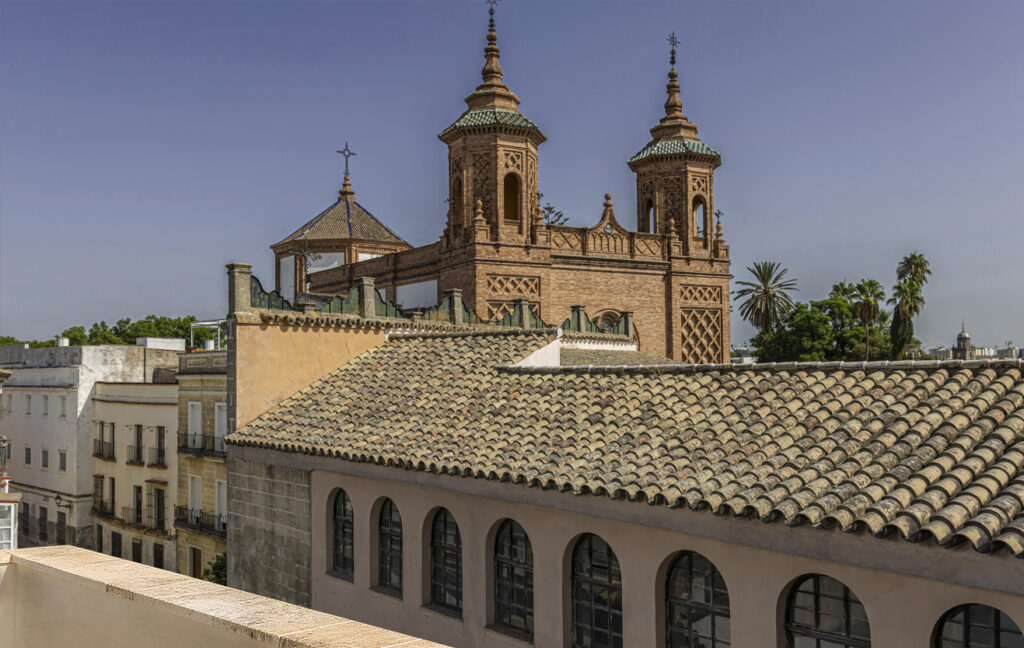
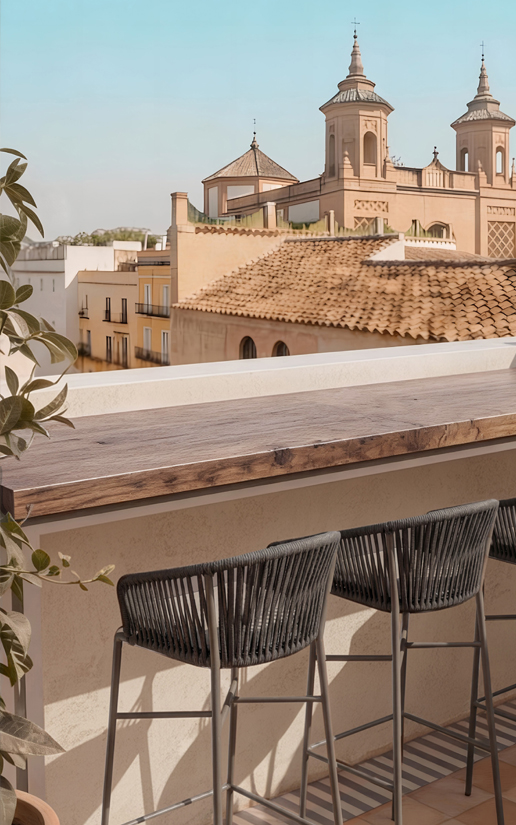
Set above the historic cityscape, the roof terrace offers open views across Jerez.
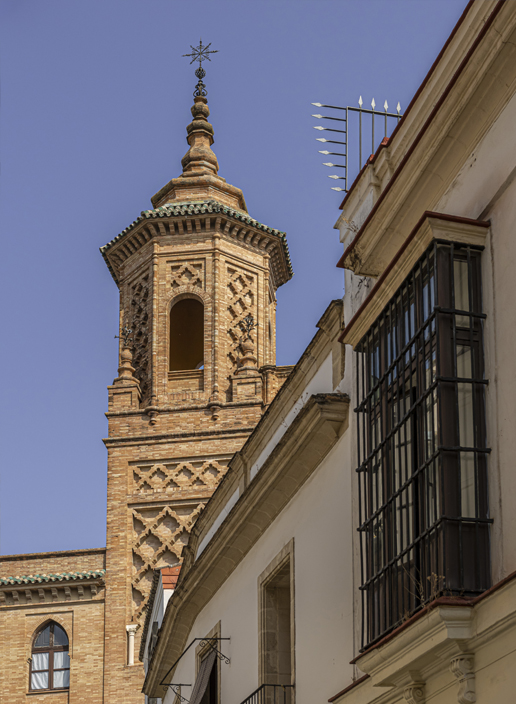
With sightlines extending over surrounding rooftops and toward the stone mass of the neighboring landmark, the terrace looks out across a skyline marked by historic steeples and cultural landmarks, including the Andalusia Flamenco Museum. From this elevation, the relationship between the home and the city is most clearly felt, with layers of history unfolding outward in every direction.
The Roof Terrace Spaces
Set above the historic cityscape, the roof terrace offers open views across Jerez.
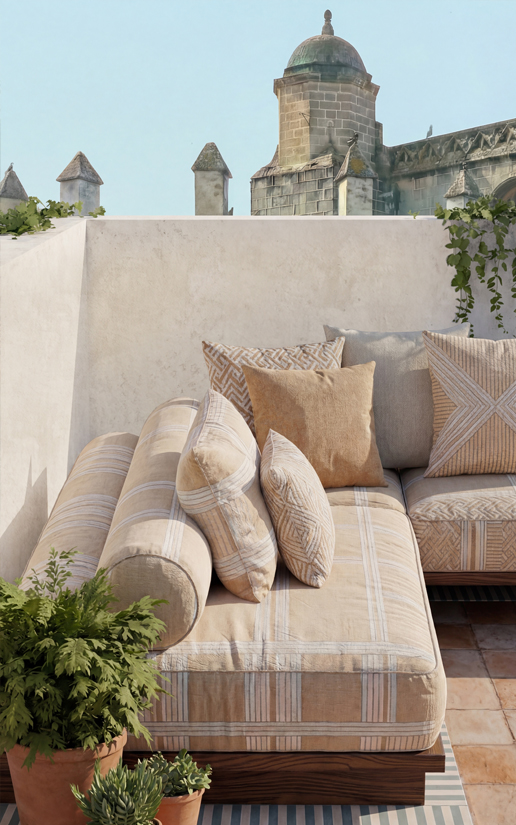
With licensing underway, the final layout is being developed and is intended to include areas for outdoor cooking and dining, sunbathing and lounge seating, as well as a dedicated wellness zone with a jacuzzi, sauna, powder room, and outdoor shower.
About the Design Process
The project is expected to break ground in early 2026.
The rendered views and spatial descriptions presented throughout this article reflect the current design intent, offering a sense of the atmosphere, scale, and potential of the home.
As work progresses, the process of restoration may reveal existing materials, structural conditions, or architectural details that inform and refine the final outcome. In this sense, the design remains responsive – shaped not only by drawings, but by the building itself as it is fully uncovered.