


Southern Spain is known for its climate, character, and pace of life. For those considering home ownership or extended stays, practical questions around access, healthcare, and everyday infrastructure naturally follow.
This guide outlines how these systems function across the region.
1. Arriving & Departing2. Moving Within Andalusia3. Connected to Madrid & Beyond4. Healthcare Access5. Digital & Energy Infrastructure6. About this Guide
Arriving & Departing

Southern Spain is supported by a network of international and regional airports, allowing access without reliance on a single entry point.
- Málaga-Costa del Sol Airport serves as the region’s primary international gateway, operating year-round and supporting travel at scale.
- Seville Airport provides strong access to western and interior Andalusia, supporting both domestic and international routes.
- Jerez Airport serves the Cádiz coast and surrounding countryside primarily through domestic routes, offering a smaller, more direct point of arrival.
- Almería Airport supports access to eastern Andalusia, including coastal and inland destinations.
- Granada–Jaén Airport connects to the eastern interior, including Granada and surrounding mountain areas.
Together, these access points support movement across southern Spain, allowing travel to be planned based on destination rather than a single arrival point.
Moving Within Andalusia
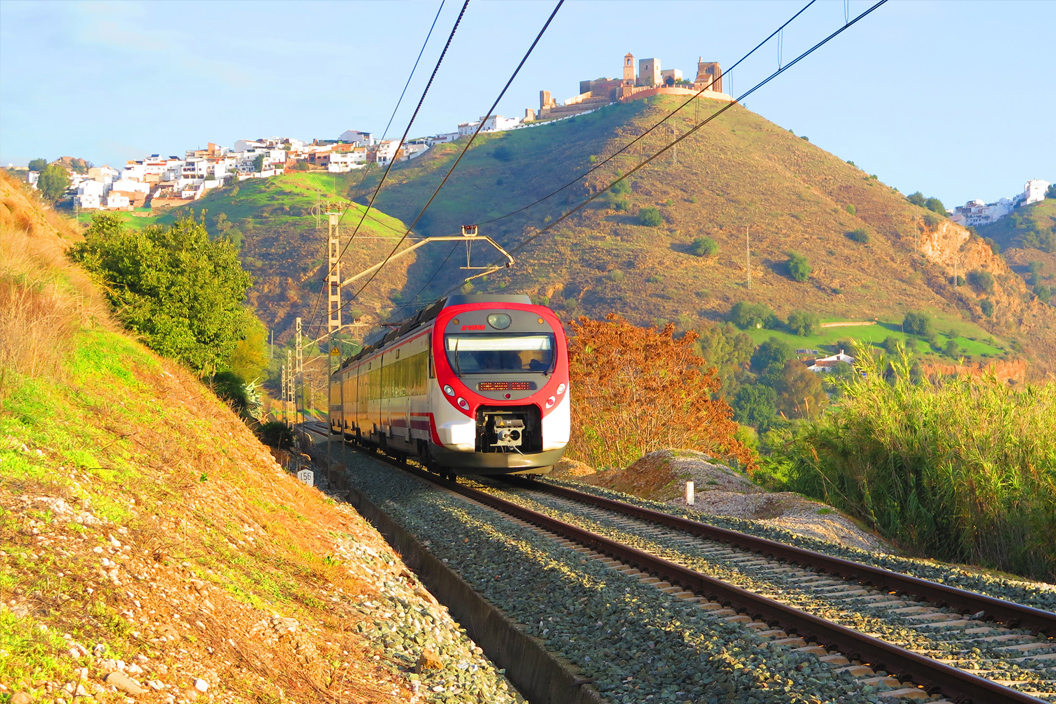
Movement within Andalusia is supported by a combination of high-speed rail, regional train connections, and an extensive motorway network, allowing travel across the region without reliance on a single mode of transport.
Rail services across Andalusia, including both high-speed and regional routes, are typically operated by Renfe, Spain’s national rail provider, and can be booked directly or through widely used platforms such as Omio.
Cities Connected by High-Speed Rail (AVE)
Spain’s high-speed rail network, the AVE, links Andalusia’s primary cities and forms the backbone of long-distance travel within the region:
- Seville (Sevilla–Santa Justa)
- Córdoba (Córdoba Central)
- Málaga (Málaga María Zambrano)
- Granada (Granada)
These cities have direct high-speed connections to Madrid and are also linked to one another through frequent services, with Córdoba functioning as a central transfer point within the network.
Regional and Local Rail Connections
Beyond the high-speed network, regional rail lines connect additional provincial capitals and smaller towns to major hubs:
- Cádiz
- Jerez de la Frontera
- Huelva
- Jaén
- Almería
In addition to these cities, regional rail services reach many smaller towns across Andalusia, linking interior communities to larger urban centers and mainline routes.
Road Travel Across the Region
Andalusia’s motorway network is continuous and clearly structured, linking coastal areas, inland cities, and rural regions directly. Travel by car is straightforward, with well-marked routes designed to support both everyday movement and longer regional journeys.
This combination of rail and road infrastructure makes movement across Andalusia practical and predictable, whether traveling between cities, accessing smaller towns, or moving between coast and countryside.
Connected to Madrid & Beyond

One of the practical advantages of owning a home in southern Spain, whether as a permanent residence or a holiday home, is how easily the region connects to the rest of Spain and Europe.
High-speed rail links Andalusia’s main cities directly to Madrid, Spain’s primary national hub. From Seville, Córdoba, Málaga, and Granada, frequent AVE services make it easy to reach the capital, where onward rail connections extend to cities such as Barcelona and Valencia. For those who prefer to travel by train, much of the country is within comfortable reach.
Air travel adds another layer of flexibility. Andalusia’s network of international and regional airports supports both domestic and European routes, with connections to cities such as Mallorca, London, Paris, and Rome. Routes operate consistently throughout the year, without reliance on a single entry point.
Together, rail and air connections position southern Spain as a well-connected base rather than a remote destination, allowing time in Andalusia to be easily combined with travel across Spain and Europe.
Healthcare Access

Healthcare in Spain operates as a core public service, supporting both long-term residents and those spending extended periods in the country.
A well-established dual system combines a comprehensive public network with an extensive private sector. In Andalusia, this translates into consistent, year-round access to healthcare across both urban and regional settings.
Public Healthcare
The public healthcare system in Andalusia is managed by the Servicio Andaluz de Salud (SAS) and provides universal coverage through a network of hospitals, clinics, and specialized medical centers distributed across the region. Major cities such as Seville and Málaga are home to advanced hospitals equipped for complex procedures, while provincial capitals and regional centers ensure access to routine and specialist care.
How access works for non-residents
For visitors and non-residents, access to healthcare in Andalusia depends on the type of care required.
- Emergency care is provided regardless of residency status, nationality, or documentation. Urgent medical treatment is not delayed due to administrative requirements.
- For non-emergency care, access typically takes place through the private healthcare system.
Citizens of other European Union countries may also access Spain’s public healthcare system when medically necessary by presenting a valid European Health Insurance Card (EHIC), in line with standard regulations.
Private Healthcare
Alongside the public network, Andalusia has a strong private healthcare sector that many international residents and second-home owners choose for its accessibility, flexibility, and multilingual services. Private hospitals and clinics are widely available in areas such as Marbella, Málaga, Seville, and in Cádiz and Jerez, with many facilities offering English-speaking staff and internationally trained specialists.
Appointments with private specialists are typically available quickly, and diagnostic services and treatments are integrated into Spain’s broader healthcare infrastructure.
How access works for non-residents
Private healthcare plays an important role for visitors and short-term residents. Many private hospitals and clinics are used to serving international patients, with care typically accessed through private insurance or direct payment. This allows routine appointments, diagnostics, and specialist care to be arranged outside the public registration system, depending on the provider and type of care required.
Pharmacies
Healthcare access in southern Spain is supported by a dense network of pharmacies operating across cities, along the coast, and inland. Pharmacies are widely available year-round and often serve as a first point of contact for minor health concerns.
Licensed pharmacists can provide guidance on over-the-counter medications, basic health advice, and prescription dispensing within Spain’s integrated digital system. This accessibility supports day-to-day healthcare needs for both residents and visitors.
Prescriptions issued by doctors are managed electronically, enabling medications to be dispensed efficiently through a centralized, paperless system.
Digital & Energy Infrastructure

Life in southern Spain is supported by digital and energy systems designed to function reliably year-round.
Connectivity
Spain has one of the most extensive fiber-optic networks in Europe, with coverage reaching major cities as well as many smaller towns and rural areas across Andalusia. High-speed internet supports daily life, remote work, and international communication in both urban and countryside settings.
Mobile coverage is broadly consistent throughout the region, supporting everyday communication and mobility across cities, coastal areas, and much of the interior.
In more remote rural locations, connectivity may vary, though coverage continues to expand.
Energy and Utilities
Andalusia is a leading region in Spain for renewable energy production, particularly solar and wind. Investment in energy infrastructure supports a stable electrical grid and dependable utilities, allowing homes and communities to function without interruption.
Together, these systems form the practical foundation that allows life in southern Spain to operate quietly and efficiently, supporting both everyday routines and longer stays.
About this guide
This guide is intended as a general overview of everyday infrastructure and services in southern Spain. Availability, access, and conditions may vary by location or over time. Readers are encouraged to refer to official sources or service providers for the most current and location-specific information.