

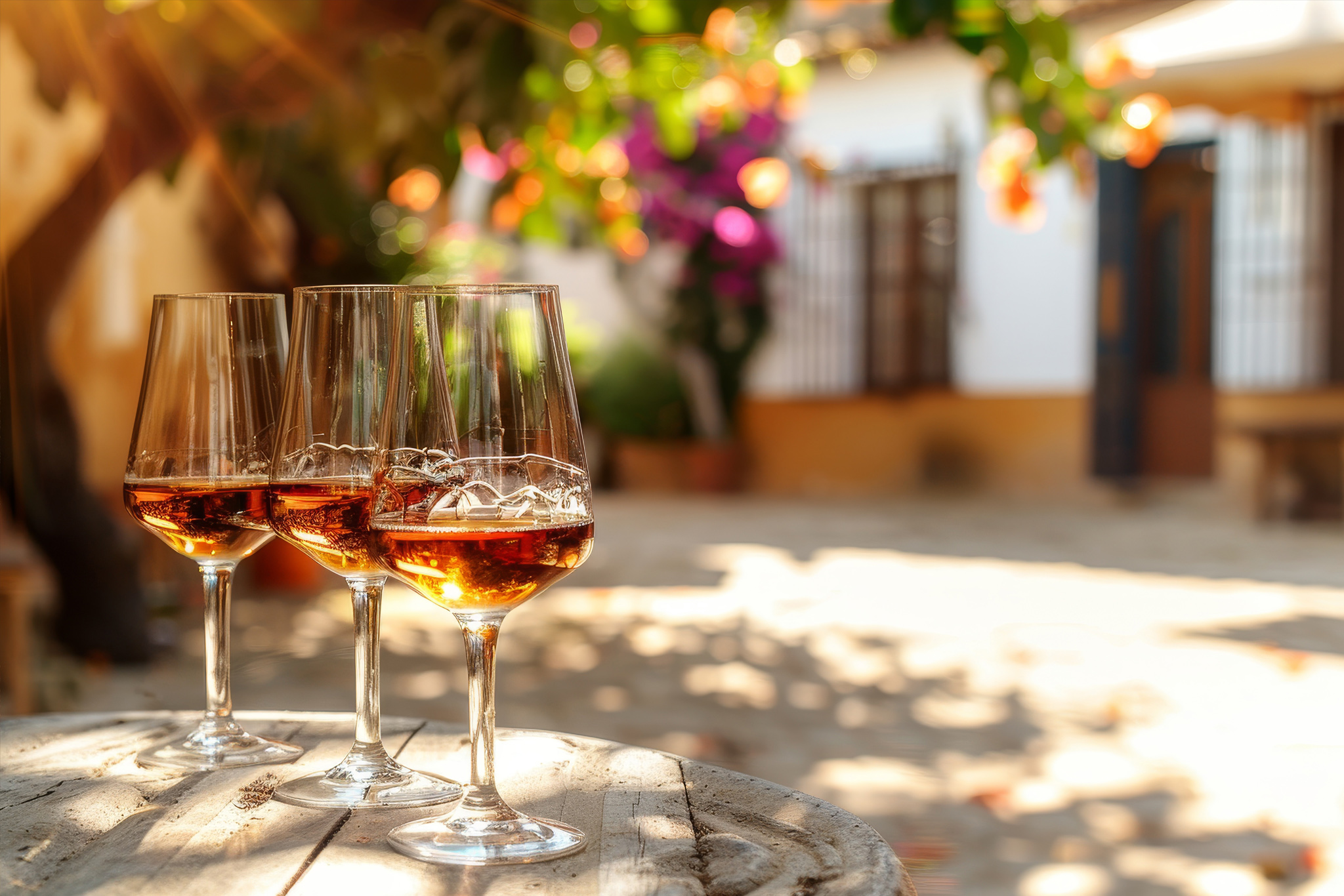
Across Europe, the great wines often take their names not from a grape variety, but from the place they come from – the land itself shaping both name and flavor. Famous examples include Rioja, a region in northern Spain; Sancerre, a hilltop town in France’s Loire Valley; Barolo, a village in Italy’s Piedmont; and Port, from the city of Porto in northern Portugal. Similarly, in the far south of Spain lies Jerez (pronounced heh-RETH), whose very name – through its older form, Xeres – is the origin of the English word Sherry, a wine with roots that reach back thousands of years.
Ask most people about Sherry, and they’ll picture a forgotten bottle from decades past – a far cry from the fresh, complex, and distinctive wines still being made in southern Spain today.
Our story of Sherry unfolds in five parts – from the vineyards to the visionaries shaping its next chapter:
- 1. Reimagine Sherry
- 2. Discover the Landscape and Origins
- 3. Step Inside the Bodegas
- 4. Learn the Styles
- 5. Meet the New Generation
Reimagine Sherry
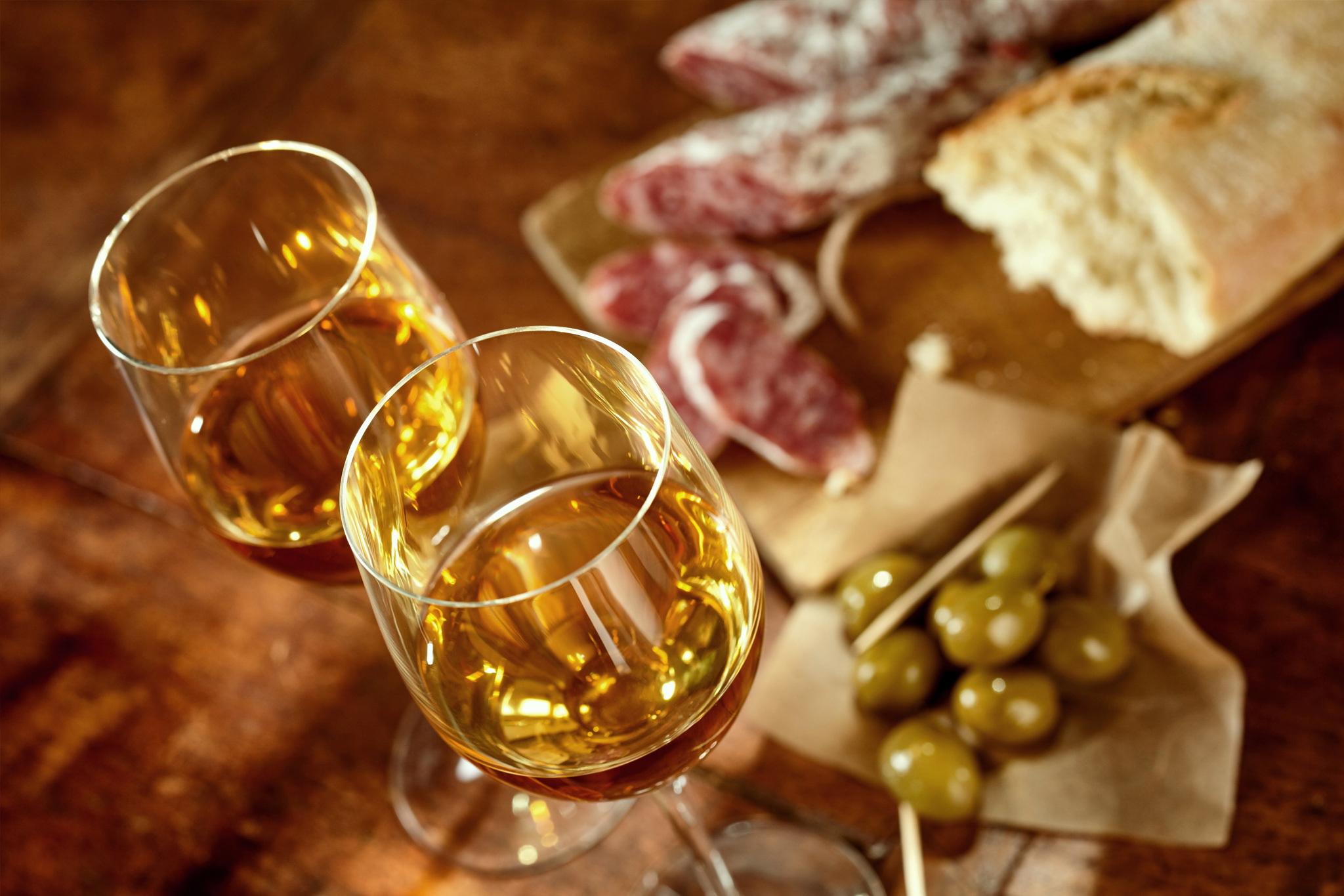
Uncovering Spain’s most misunderstood wine.
For much of the last century, Sherry’s international image was defined by its exports. By the 1970s, sweet “cream” Sherries had become household staples in Britain, while the crisp, dry styles enjoyed in Spain remained largely unknown. The legacy of that era still lingers – a misunderstanding that hides one of the world’s most distinctive wines.
Sherry is a fortified wine made from white grapes grown around the Andalusian city of Jerez. After fermentation, a small amount of brandy is added to strengthen and stabilize the wine before it enters the barrel for aging – a process that can last years, even decades. Sherry is the only wine in the world that ages through the solera system, a tiered arrangement of barrels where younger wines are gradually blended with older ones to build depth, balance, and consistency. The result is a drink that can range from bone-dry and delicate to rich and sweet, capable of pairing with everything from seafood and tapas to desserts and cheeses.
Sherry’s character, however, begins not in the barrel but in the land itself – a region where soil, sunlight, and sea winds work together to shape every drop.
Discover the Landscapes & Origins
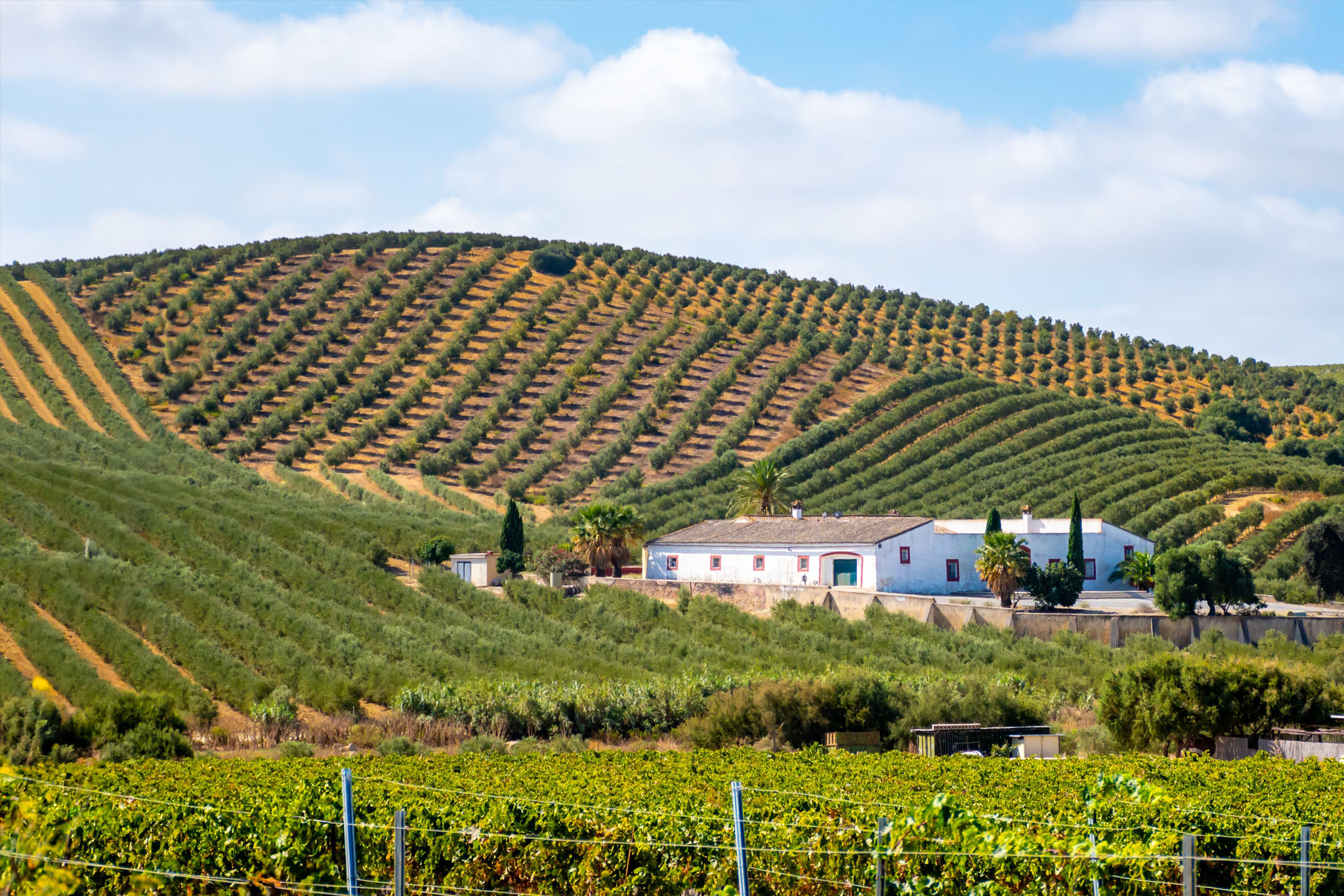
The geography, soil, and climate in the Sherry Triangle make this wine unlike any other.
In the southernmost province of Andalusia – and of mainland Europe – lies the region known as the Sherry Triangle. Formed by the cities of Jerez de la Frontera, Sanlúcar de Barrameda, and El Puerto de Santa María, this small area is the only place in the world legally permitted to produce Sherry.
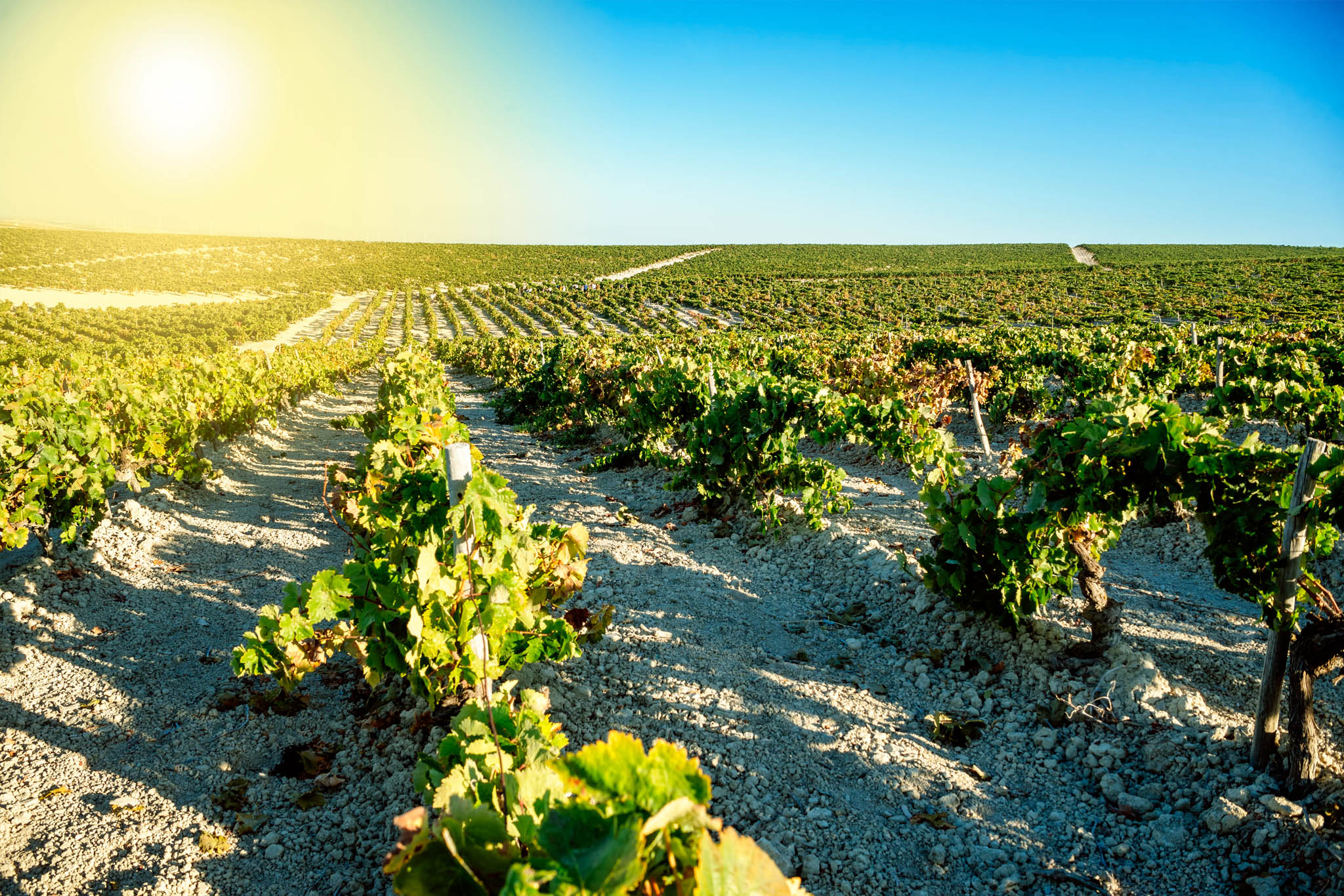
Its location, just inland from the Atlantic coast, creates a balance of warm sunlight and cooling ocean influence, ideal for growing the white grapes that form Sherry’s base wines.
The area’s defining feature is its chalky white albariza soil, made from ancient marine sediment. Light and porous, it acts as a natural reservoir – soaking up winter rains and slowly releasing moisture through the long, dry summers. This combination of soil and Mediterranean climate gives the region its distinctive rhythm of growth and rest, shaping the subtle flavors that will later deepen and evolve in the cellar.
Here, where the vines meet the sea breeze, the landscape gives way to another defining symbol of Sherry: the bodegas, the monumental wine cellars where time, air, and craft take over.
Step Inside the Bodegas
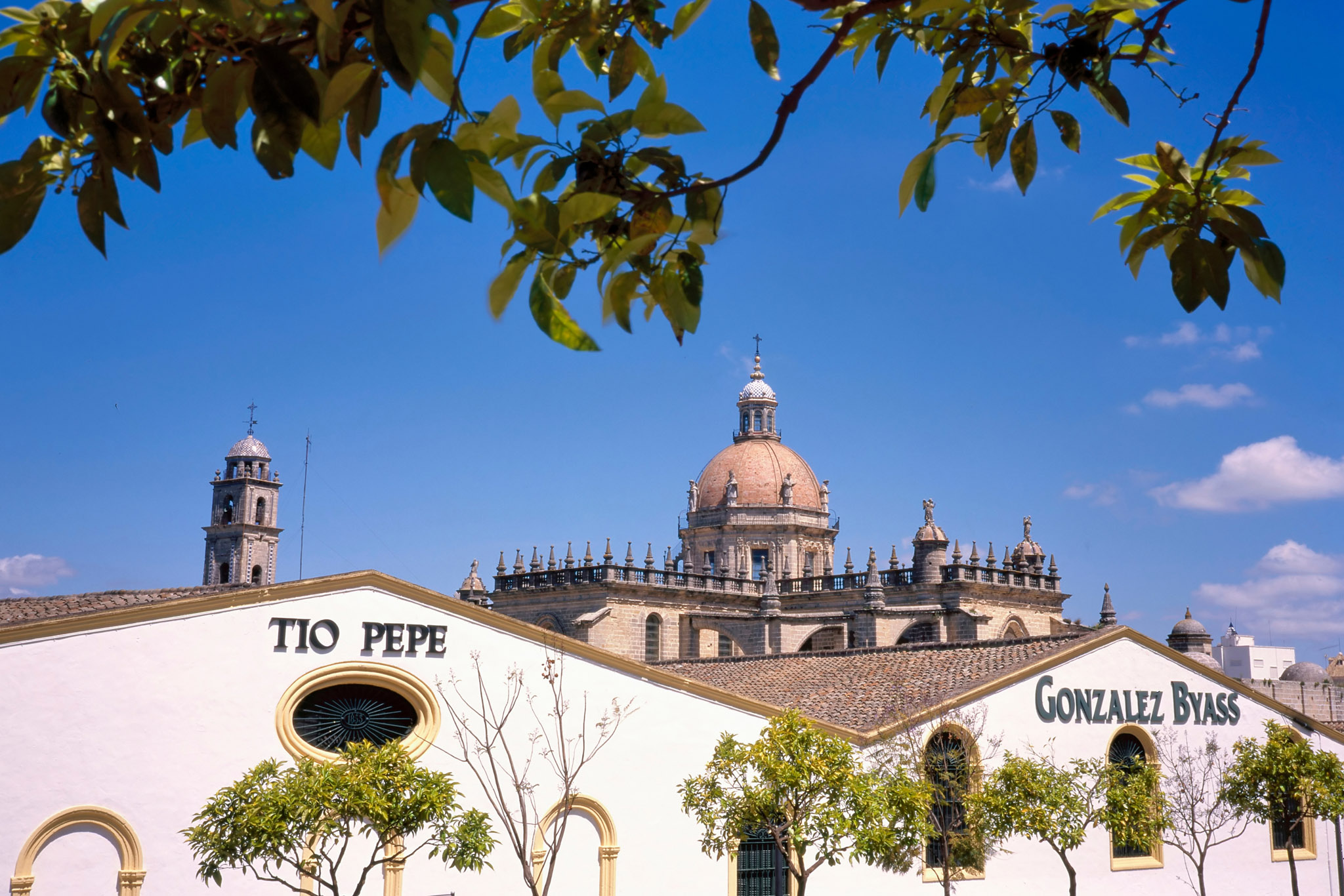
Bodegas: the soaring cellars that define the cityscape of Jerez.
Across Jerez and the neighboring towns of the Sherry Triangle, the bodegas – vast, whitewashed wine cellars – are as much a part of the landscape as church spires or plazas. Many of these buildings date back to the 18th and 19th centuries, designed with souring vaulted ceilings, sand-covered floors, and latticed windows that control light and airflow. Inside, rows of barrels rest quietly in the half-light, aging Sherry at their own unhurried pace.
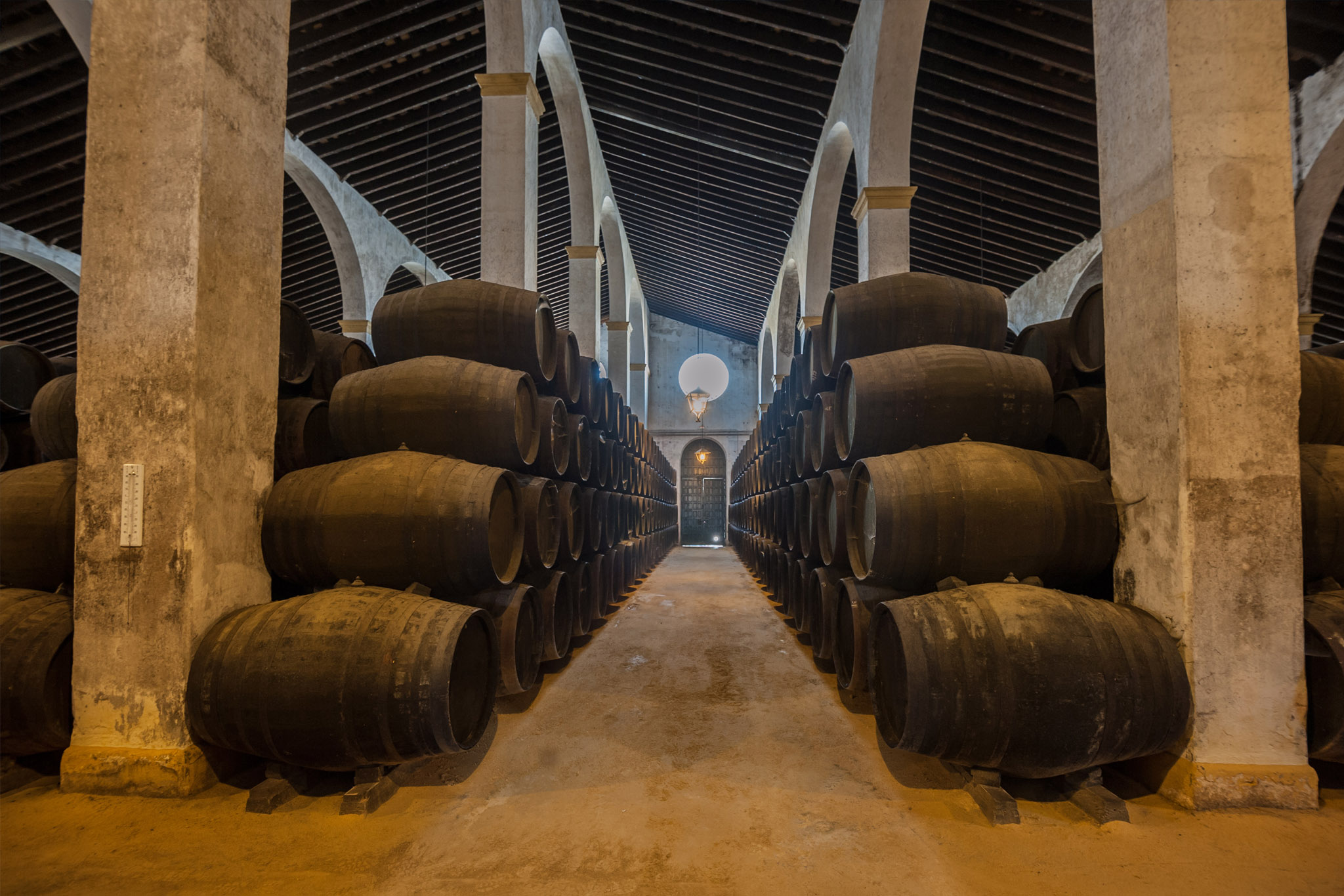
Today, many bodegas welcome visitors for tastings, tours, and cellar walks, offering a first-hand look at how Sherry evolves from barrel to glass.
The region blends family-run houses, such as Valdespino and Bodegas Hidalgo La Gitana, with larger, historic producers like González Byass, Lustau, and Osborne. Some, like Tío Pepe in Jerez or Osborne in El Puerto de Santa María, have expanded into hotels and restaurants, pairing their wines with Andalusian cuisine and hospitality.
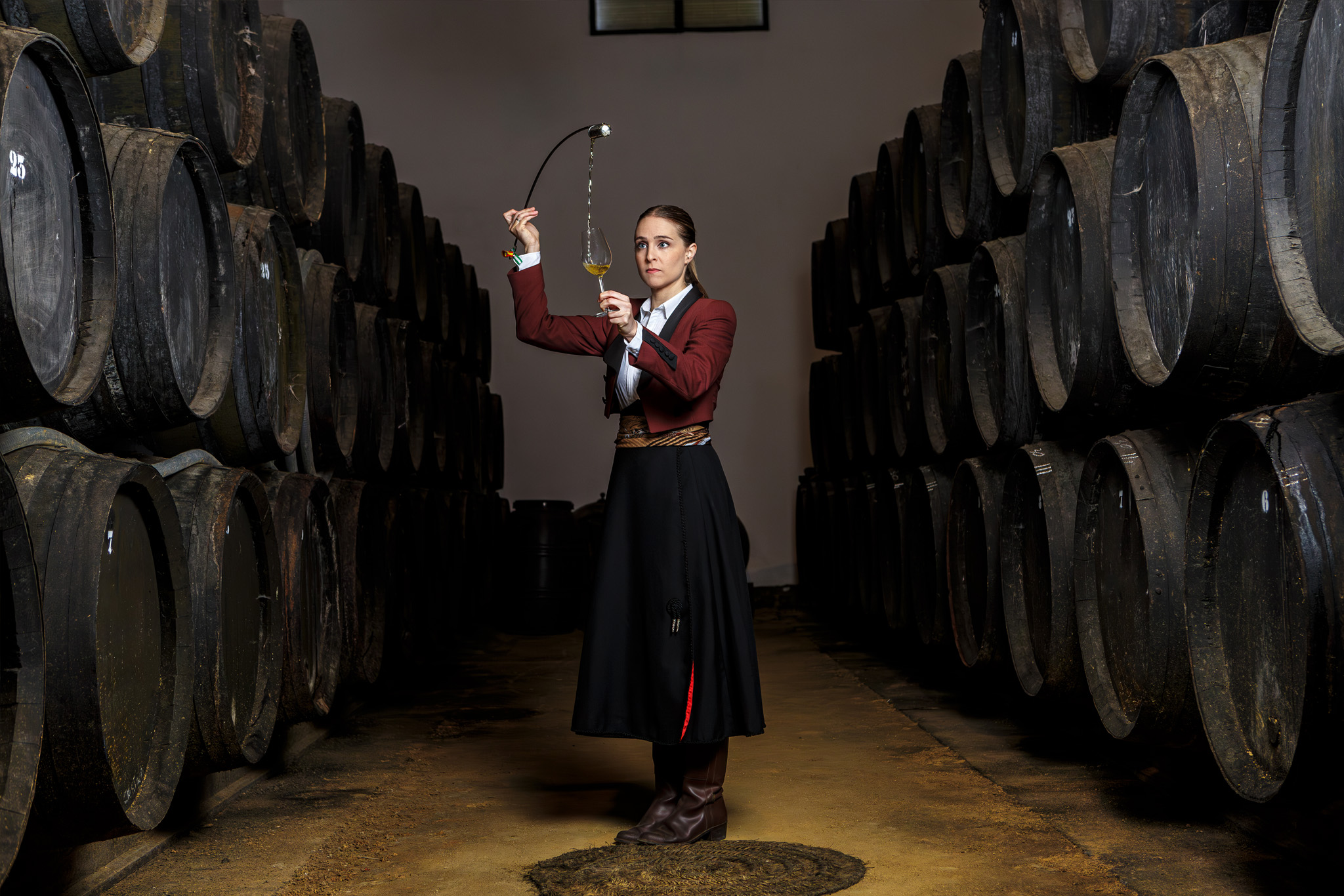
From small family-run cellars to major global brands, every bodega helps preserve the same enduring tradition.
Tradition is recognizable in the same style of vaulted ceilings, that rise over rows of oak casks and in the ritual of serving wine directly from the barrel with a venencia, a narrow metal cup attached to a flexible rod, used to pour Sherry with with a practiced elegance.
The work that happens inside these cellars gives rise to a remarkable range of wines, each expressing a different side of Sherry’s character.
Learn the Styles
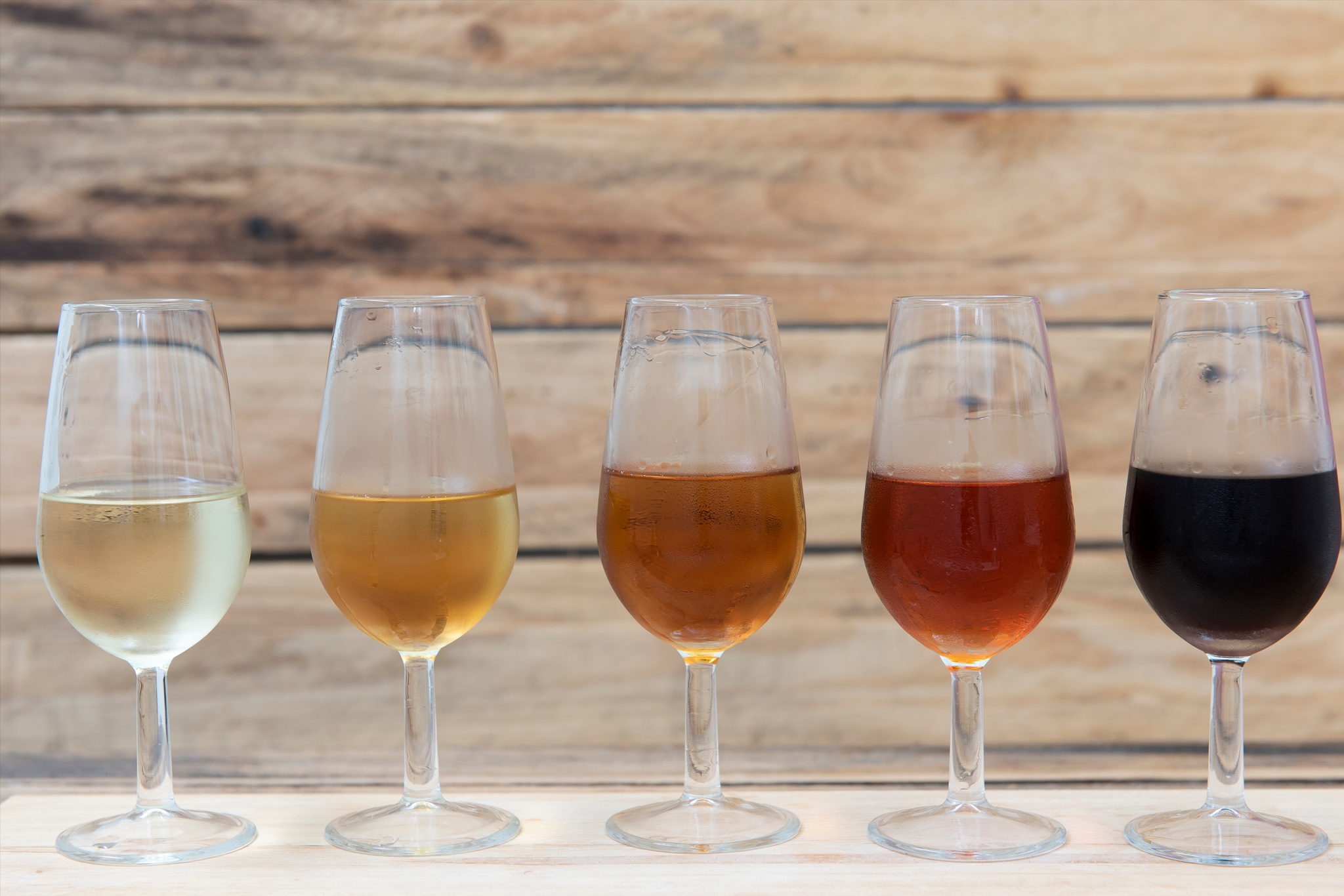
From crisp Fino to velvety Pedro Ximénez, Sherry has remarkable range and versatility. For much of the last century, however, it was the sweeter end of this spectrum — adapted for export markets like the UK — that traveled widely, leaving the dry, food-driven styles of southern Spain largely overlooked.
Sherry’s diversity is one of its greatest strengths. While all Sherries start from the same base wines made from white grapes, the way they’re aged determines their style, flavor, and color. The spectrum runs from pale and bone-dry to dark and lusciously sweet – each with its own purpose at the table.
Fino is the driest and most delicate, aged under a layer of yeast called flor that protects it from oxygen. It’s light, crisp, and best served chilled – a natural match for seafood and tapas.
Manzanilla is produced only in the coastal town of Sanlúcar de Barrameda; this variety shares Fino’s freshness but carries a faint saline edge from its seaside environment.
Amontillado begins life as a Fino but continues aging once the flor fades, gaining a nutty, amber character.
Oloroso is aged entirely without the protective flor, allowing slow oxidation that deepens color and flavor, producing a fuller, richer wine.
Pedro Ximénez (PX) and Moscatel are the sweetest varieties, made from sun-dried grapes that yield wines as dark as molasses and rich with notes of figs, dates, and caramel.
Learn the flavors
Traditionally served in small, tulip-shaped copitas, no matter which variety – sherry is poured in modest measures to stay cool and aromatic – and to suit its naturally higher strength, best enjoyed slowly.
Few wines cover such a wide spectrum of flavor and texture, a diversity now driving Sherry’s quiet revival as a new generation reinterprets a centuries-old craft.
Meet the New Generation
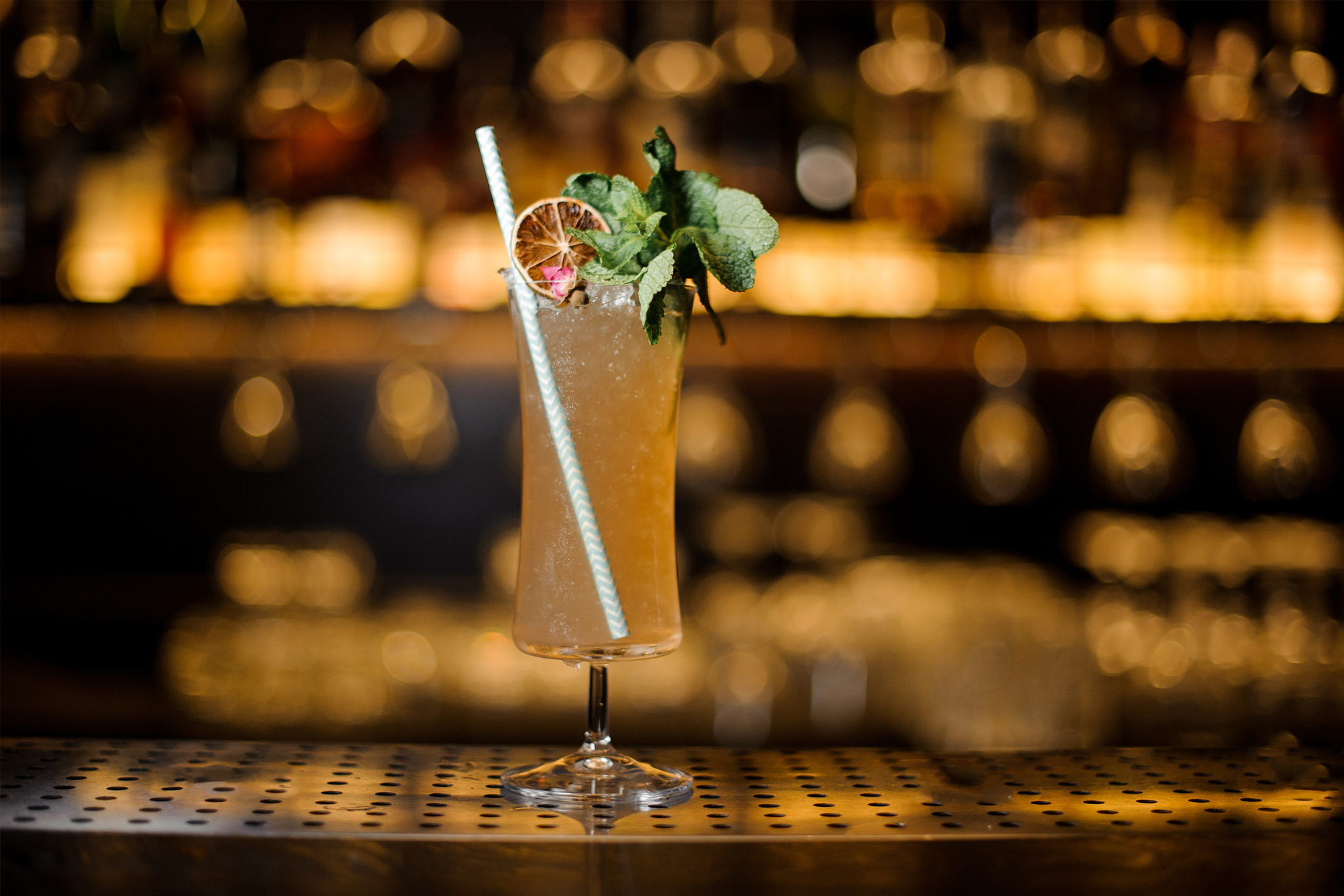
How young winemakers, chefs, and creatives are reviving Sherry’s image while honoring its timeless roots.
A quiet transformation is reshaping the Sherry Triangle. In recent years, a new generation of winemakers, restaurateurs, and entrepreneurs has begun to reintroduce Sherry to modern audiences – not as a relic, but as a wine with remarkable range and relevance. Their focus blends respect for tradition with new ideas about sustainability, presentation, and culture.
Producers such as Ramiro Ibáñez of Cota 45 and Willy Pérez of Bodegas Luis Pérez are leading the charge, experimenting with single-vineyard bottlings that express the character of the region’s albariza soils. Others are reviving forgotten methods and local grape varieties once lost to industrial-scale production. Meanwhile, the culinary scene has followed suit: bars and restaurants across Spain are offering Sherry Cocktails and pairing modern dishes with Sherry, from dry Finos with seafood to sweet PX with chocolate and citrus.
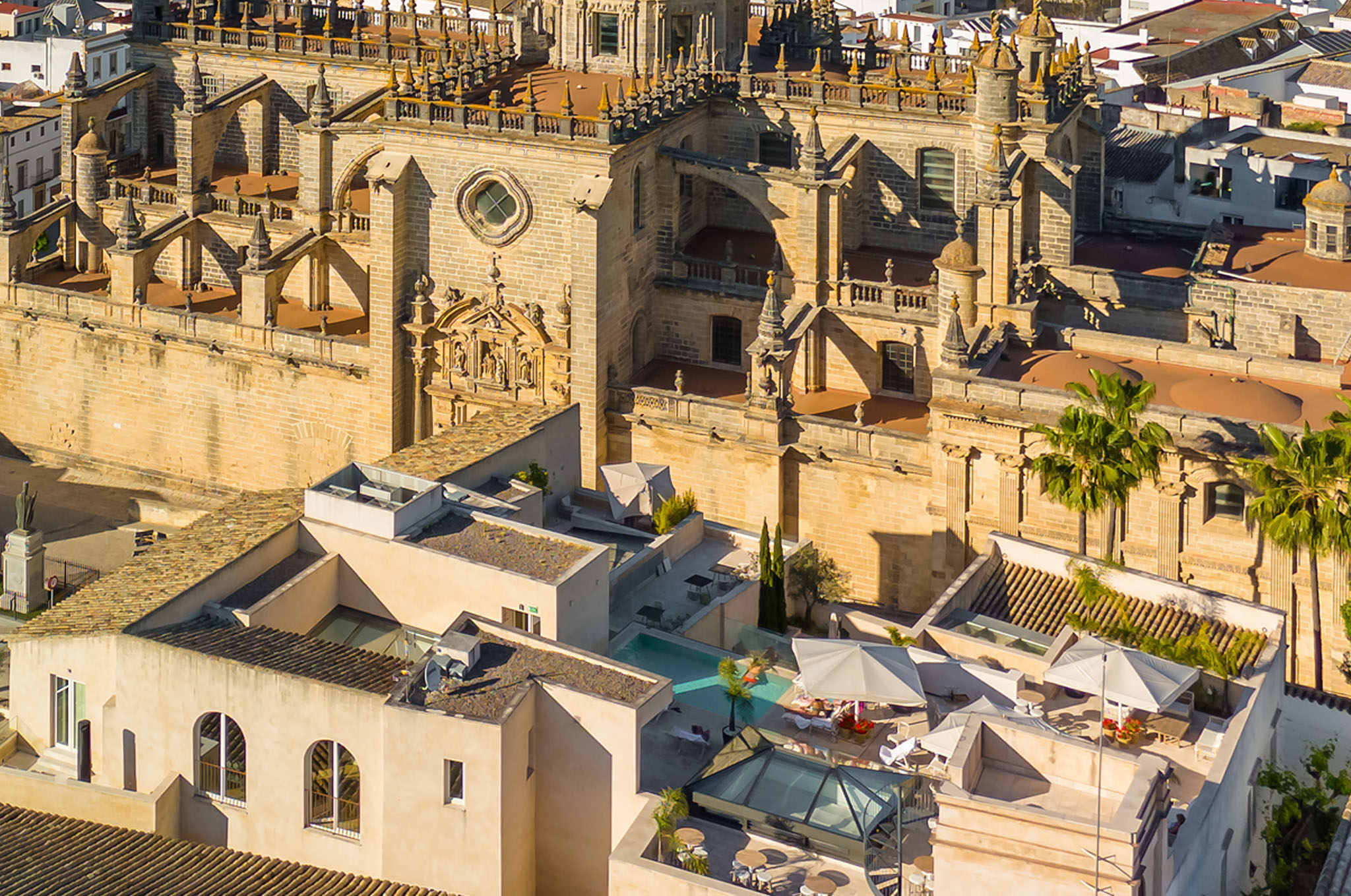
Beyond the glass, Sherry’s story is reaching a wider audience through design, hospitality, and experience. From the Tío Pepe Festival in Jerez, which brings together music and gastronomy, to curated tastings that attract travelers from around the world, Sherry is being encountered in new ways. Contemporary hospitality spaces, such as the rooftop terrace at the Hotel Bodega Tío Pepe (pictured above), offer elevated settings from which to experience the city, framing historic cellars and the surrounding skyline.
Today, the influence of Jerez reaches beyond Spain’s borders. Local cooperages such as Páez Morilla prepare and season sherry casks that are shipped to whiskey makers from Scotland to Ireland. Even Jameson Irish Whiskey matures portions of its spirit in Jerez barrels.
Few wines connect past and present as seamlessly as Sherry. Rooted in centuries of craft yet open to reinvention, it remains one of Spain’s most enduring – and evolving – expressions of place.