

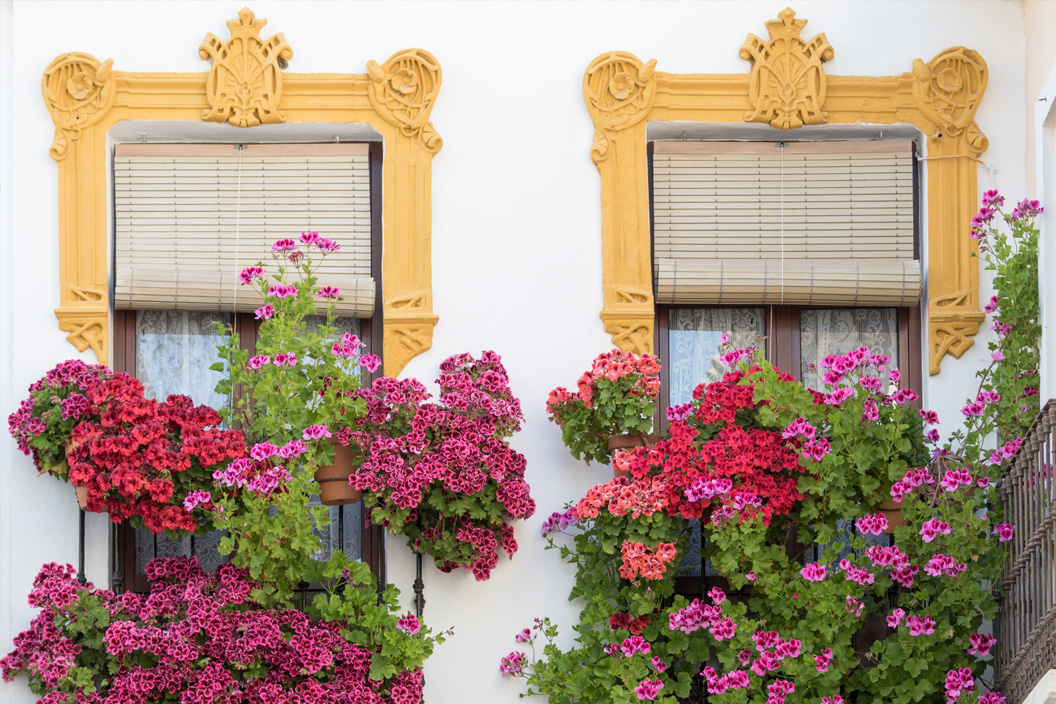
From the city that never sleeps to one that siestas
I spent 15 years, the better part of my adult life, in Manhattan, where everything moved quickly. Rushing to the train, then the office, pushing through deadlines, squeezing in yoga before a late dinner with friends. Climbing the ladder, always chasing the next promotion. Life moved fast, with the next accomplishment always just within reach.
I will always love New York and its energy. However, when I moved to southern Spain, my eyes opened to a different way of life, one that is truly focused on simply living.
For me, after years of living at full speed, life in Andalusia can be summed up in five parts:
1. The Rhythm of the Day2. A Deep Pride in Local Ingredients3. Genuine Connection4. Ideal Weather and Endless Celebrations5. What I Never Expected to Love
The Rhythm of the Day
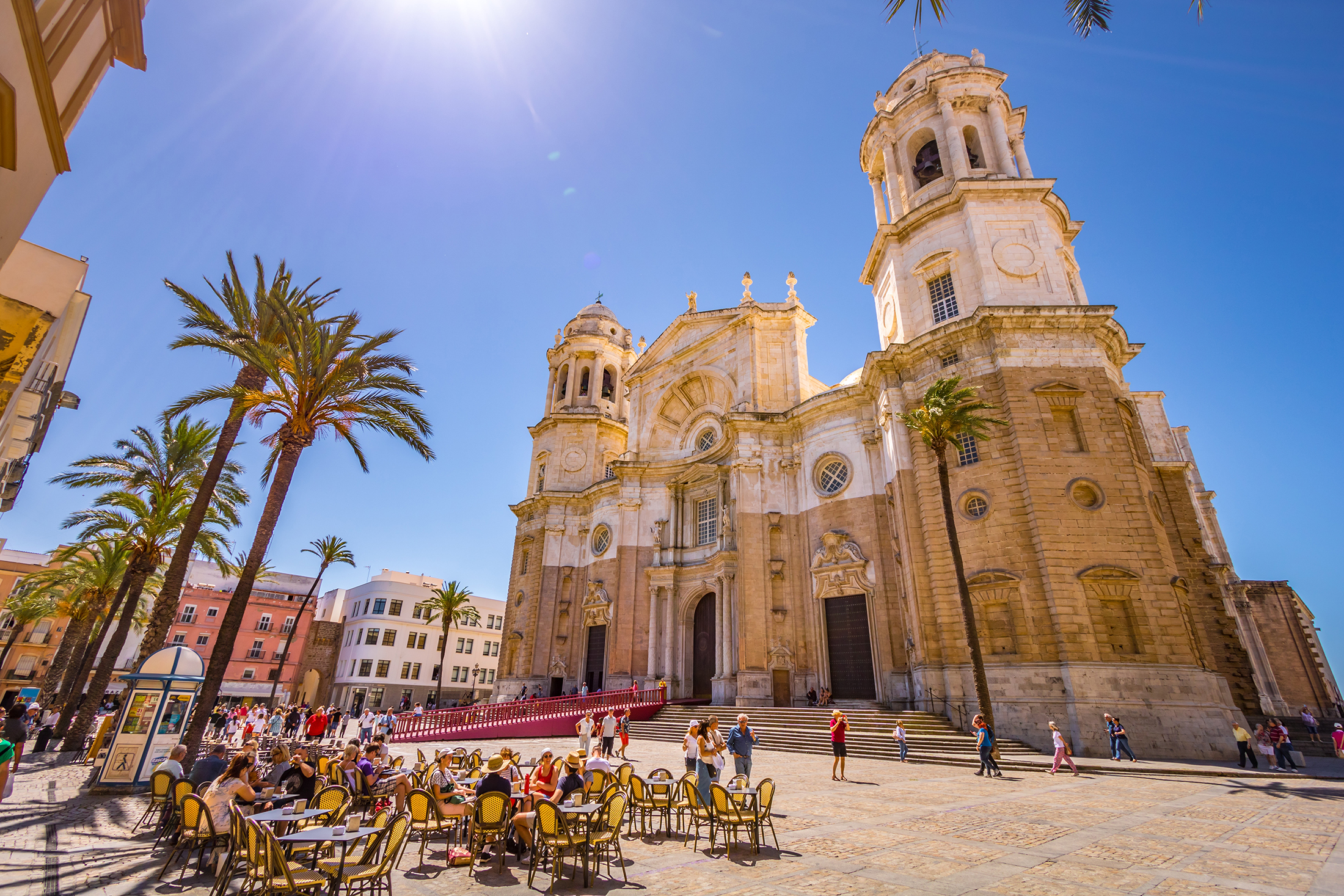
How locals approach meals best reflects a typical Andalusian day
Breakfast: A Social Ritual
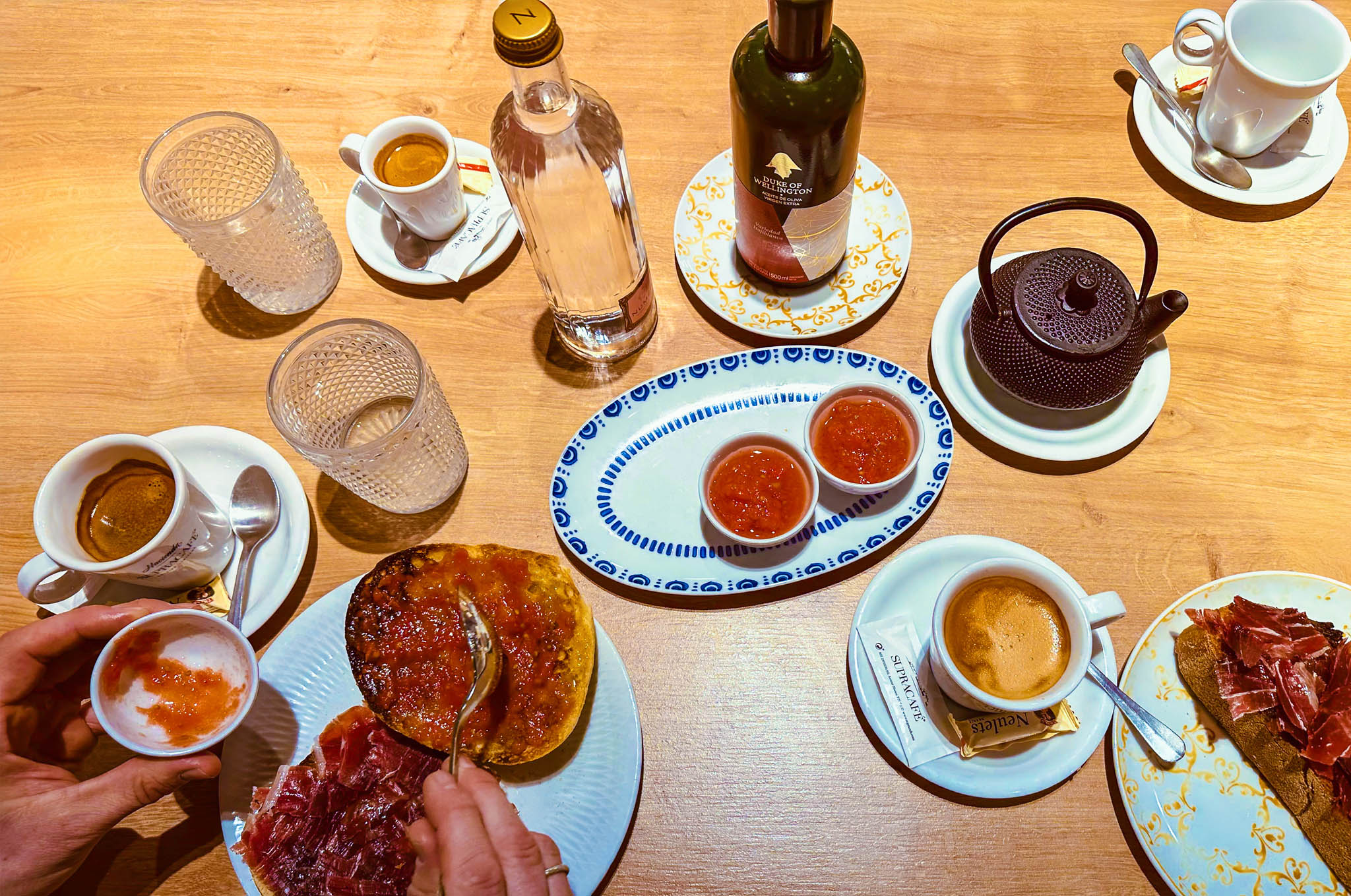
Andalusians typically eat breakfast outside of the home. It’s a social ritual, shared with family or friends. Breakfast here is shaped by the region’s staples. A common order is tostada con aceite: fresh, local, bread*, toasted well, drizzled with olive oil, and topped with crushed tomatoes and jamón ibérico. It’s simple, delicious, and quickly became my favorite meal of the day. Coffee to go is rare, and breakfast meetings are not part of the routine; a sharp contrast to my mornings in NYC. Locals are simply easing into their day as they sip their second cafe con leche, unhurried, waking up to the day’s possibilities.
*A note on the bread here: much of what’s served in restaurants and sold in bakeries is made using masa madre (literally “mother dough”), a natural sourdough starter that is continuously used to create each new batch. Its unprocessed nature is part of what makes it feel easier on the body.
Lunch: The Main Meal of the Day
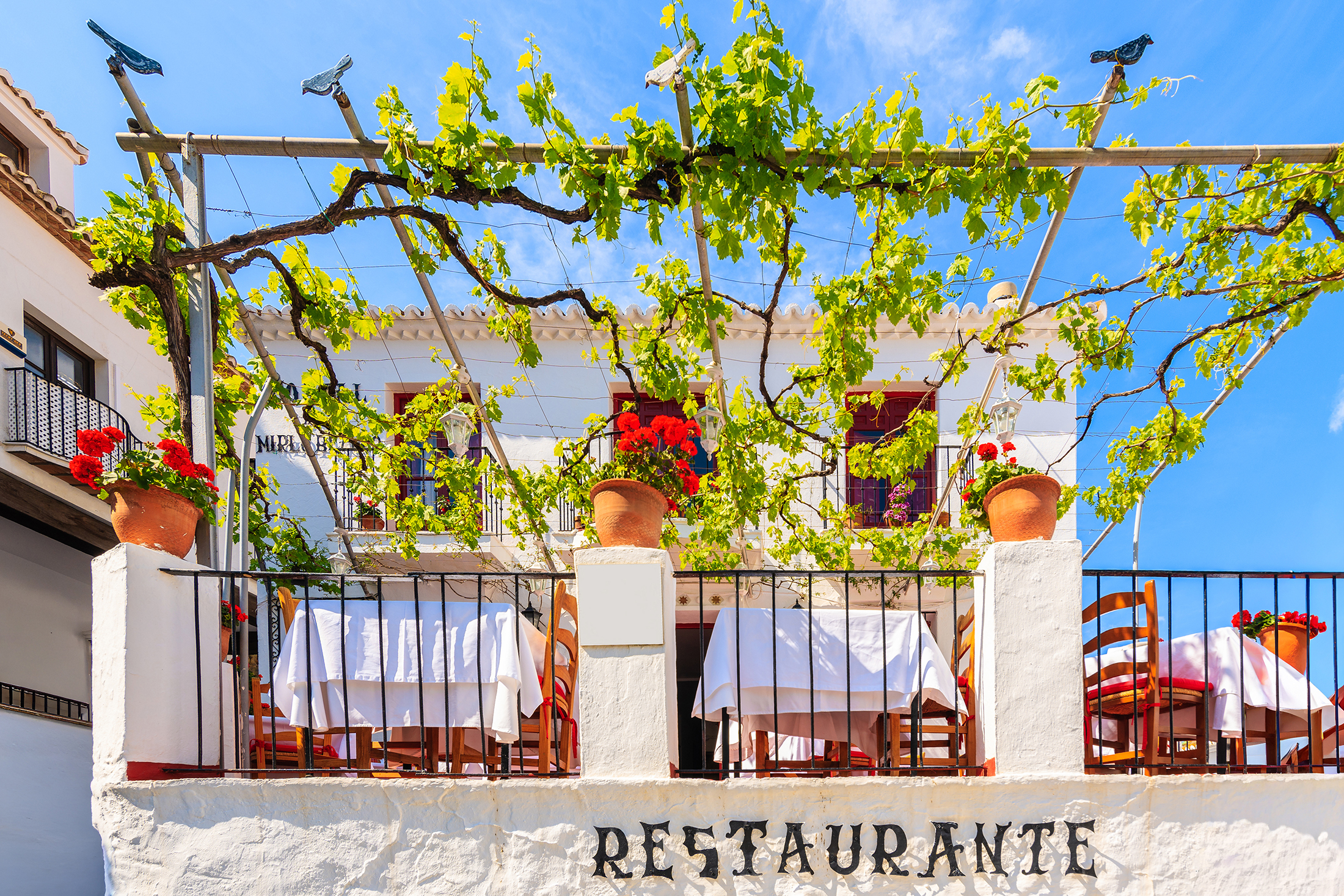
Lunch is the main meal of the day and begins around 2 PM. At first, the late timing of lunch in my new home was difficult to adjust to. Coming from New York, where most mornings didn’t allow time for breakfast, the idea of waiting until mid-afternoon to eat felt unfamiliar.
What I came to understand: locals take their time in the morning. A proper, unhurried breakfast carries you through to lunch.
In many towns across Spain, including here in Andalusia, the lunch window shapes daily life. Shops and offices typically close from 2 to 4:30 PM, as locals head home for lunch with family. A far cry from my takeaway salads in NYC, lunch here is usually a multi-course, sit-down meal, always with a set table and typically ending with a plate of seasonal fruit, noticeably more flavorful than what I was used to. After lunch, there’s time to pause and rest, with many people taking a siesta before getting back to the day. A tradition I thought was just a myth about Spain, but is very real.
For those visiting Andalusia, a helpful thing to know is that restaurants may open for lunch around 12:30 or 1 PM, but they won’t become lively until around 2 PM. Meals are relaxed, unhurried, abundant, and often shared. It’s common to order family-style, perhaps a whole grilled salt-baked fish or a pan of prawn rice with several tapas-style sides.
Dinner: Late, Light and All About Togetherness
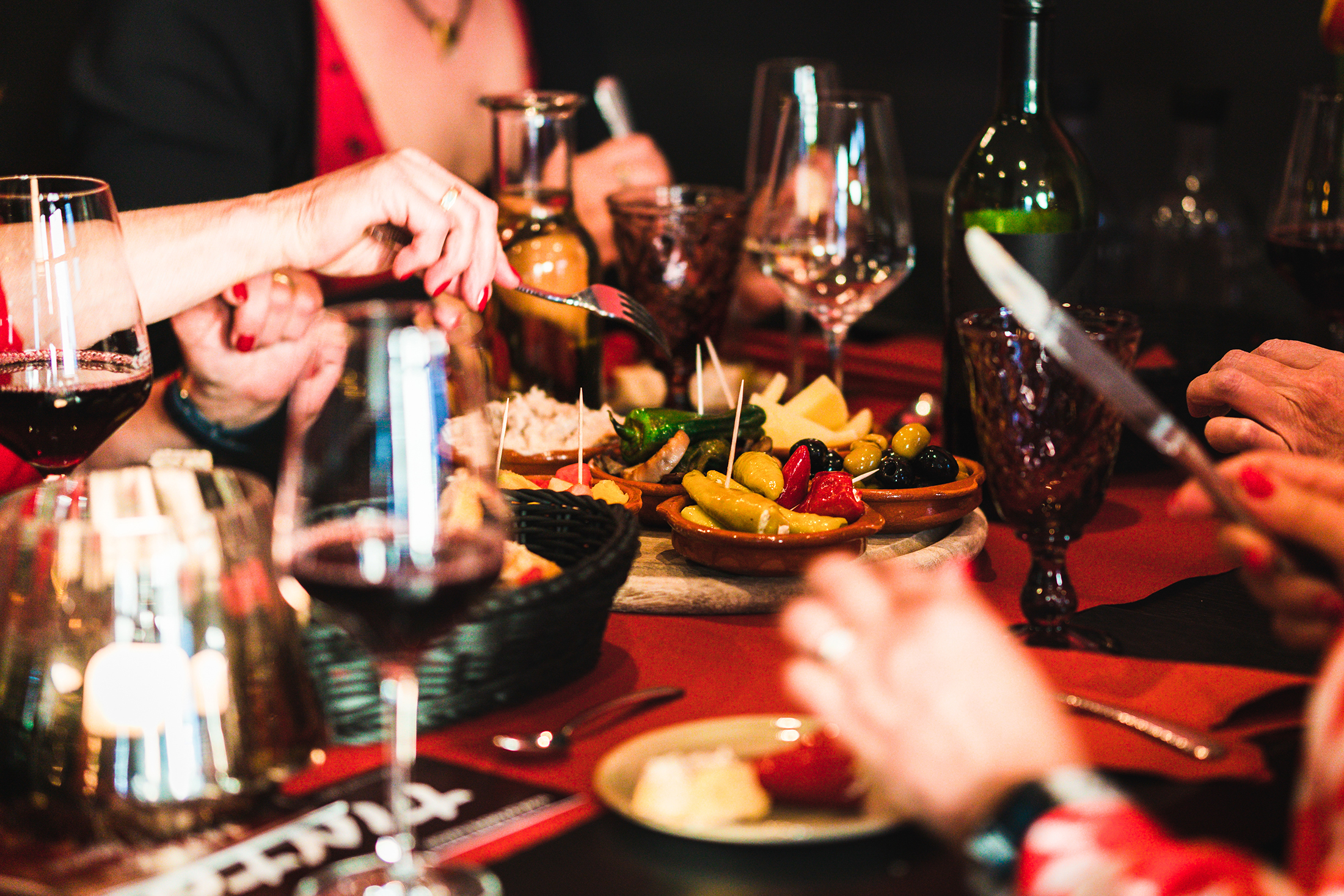
Restaurants rarely open for dinner before 8:30 PM. With lunch from 2 to 4:30 PM, early dinners aren’t common. Although the timing felt unusual at first, I’ve found it fits naturally into the rhythm of life here. Dinner is lighter and as much about the social ritual as it is about the meal, with shared tapas followed by sobremesa, an untranslatable Spanish word for lingering at the table, sharing conversation long after the plates are cleared. Here, going to bed late feels natural, as the following morning begins slowly.
A Deep Pride in Local Ingredients
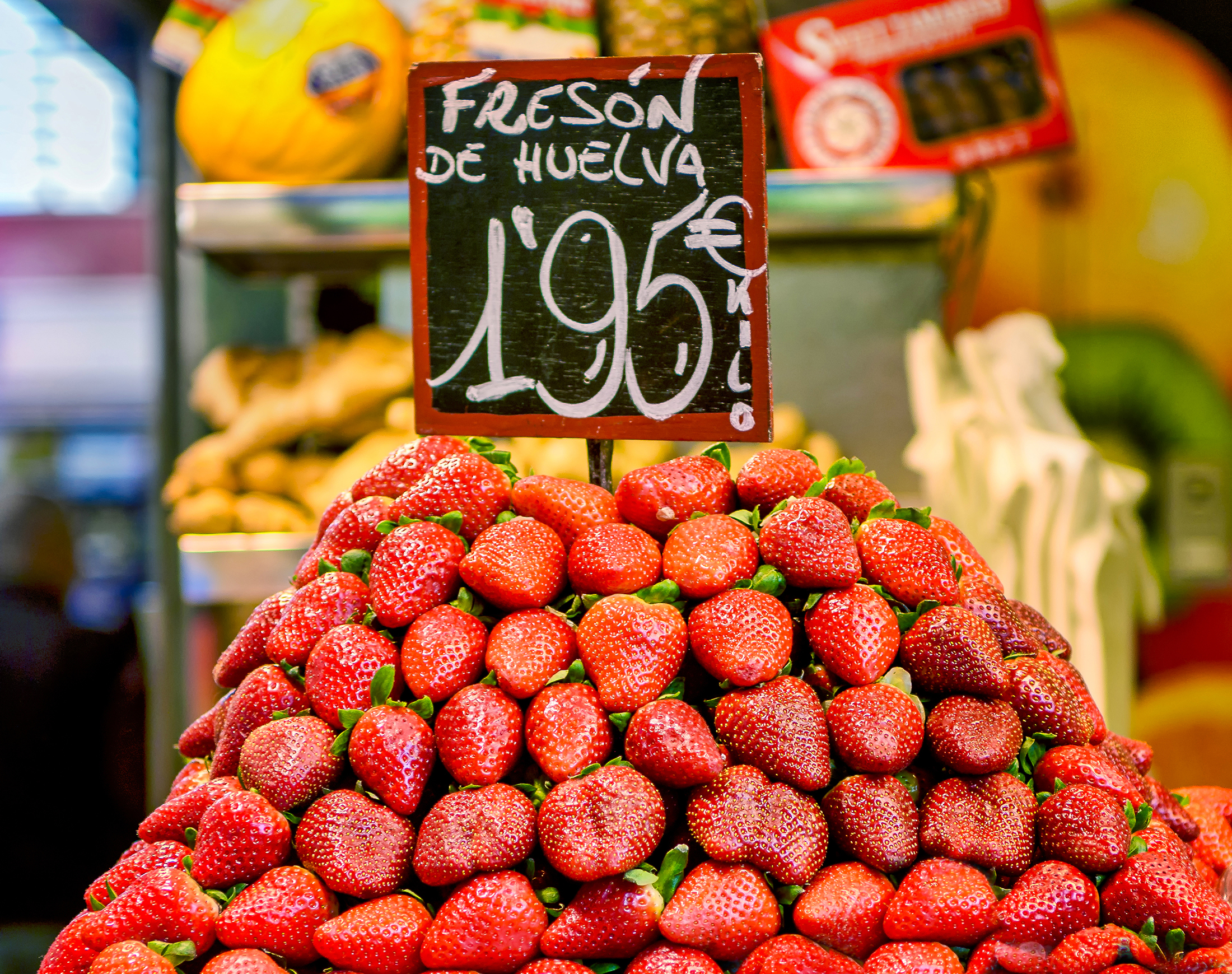
No matter the meal, the act of dining is never rushed, and always centered around local ingredients
Food is a source of pride for Andalusians, and it’s often the topic of conversation. When I first moved here without knowing the language, someone advised me to focus on learning Spanish words for foods, then I’d understand most conversations.
Every food has a home. For example, you’ll hear people ask, “Are the tomatoes from Conil?” The best strawberries and jamón are from Huelva. Steaks come from retinta cattle that graze close to the beach. Olive oil from Olvera or Jaén, bluefin tuna from Zahara, almonds from Almería, and goat cheese from the Sierra de Grazalema. The list goes on, and this way of eating is just part of the everyday.
Genuine Connection
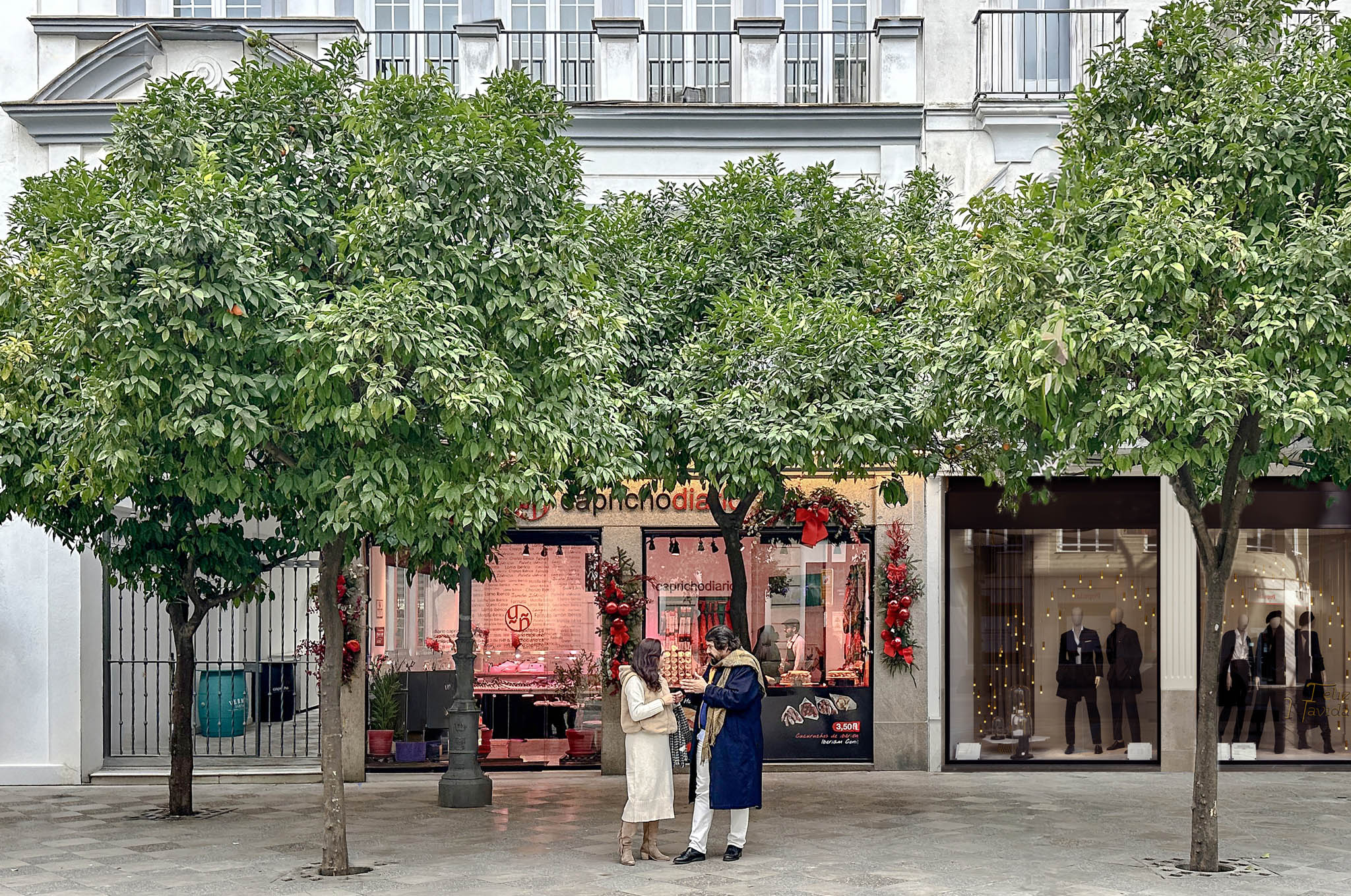
Beyond meals, it’s how people interact that stands out most
I am always amazed watching chance encounters of locals on the streets, where they stop and genuinely talk with each other, sometimes for the length of my entire breakfast. Coming from NYC, where people barely say hello, I immediately loved this part of the culture.
Andalusians are known for being warm, social, and genuinely eager to chat. Much like the North–South dynamic in the United States, Spain has its own regional stereotypes: people from the North sometimes view Andalusians as more easygoing, more relaxed about time, and always ready for a celebration.
Though it can be difficult to find English-speaking locals in this part of Spain, I’ve been afforded incredible kindness and patience as I type something into google translate, receiving a response of hand motions and voice inflections.
As an outsider, when you meet someone new, they don’t ask you what you do for a living. Instead, they ask how you’re doing, where you’re from, and if you like Andalusia (expecting a yes, as they are rightfully very proud).
I now buy my produce at a frutería, my fish at a pescadería, my meat at a carnicería, and my bread at a panadería, all small shops owned by locals within easy walking distance, because they’re everywhere. These shop owners have become characters in my own story; when I pass them on the street, we exchange a cheerful ¡hola!, always with a warm smile and an unspoken hasta luego (see you later). Something I could never imagine living elsewhere.
Ideal Weather and Endless Celebrations
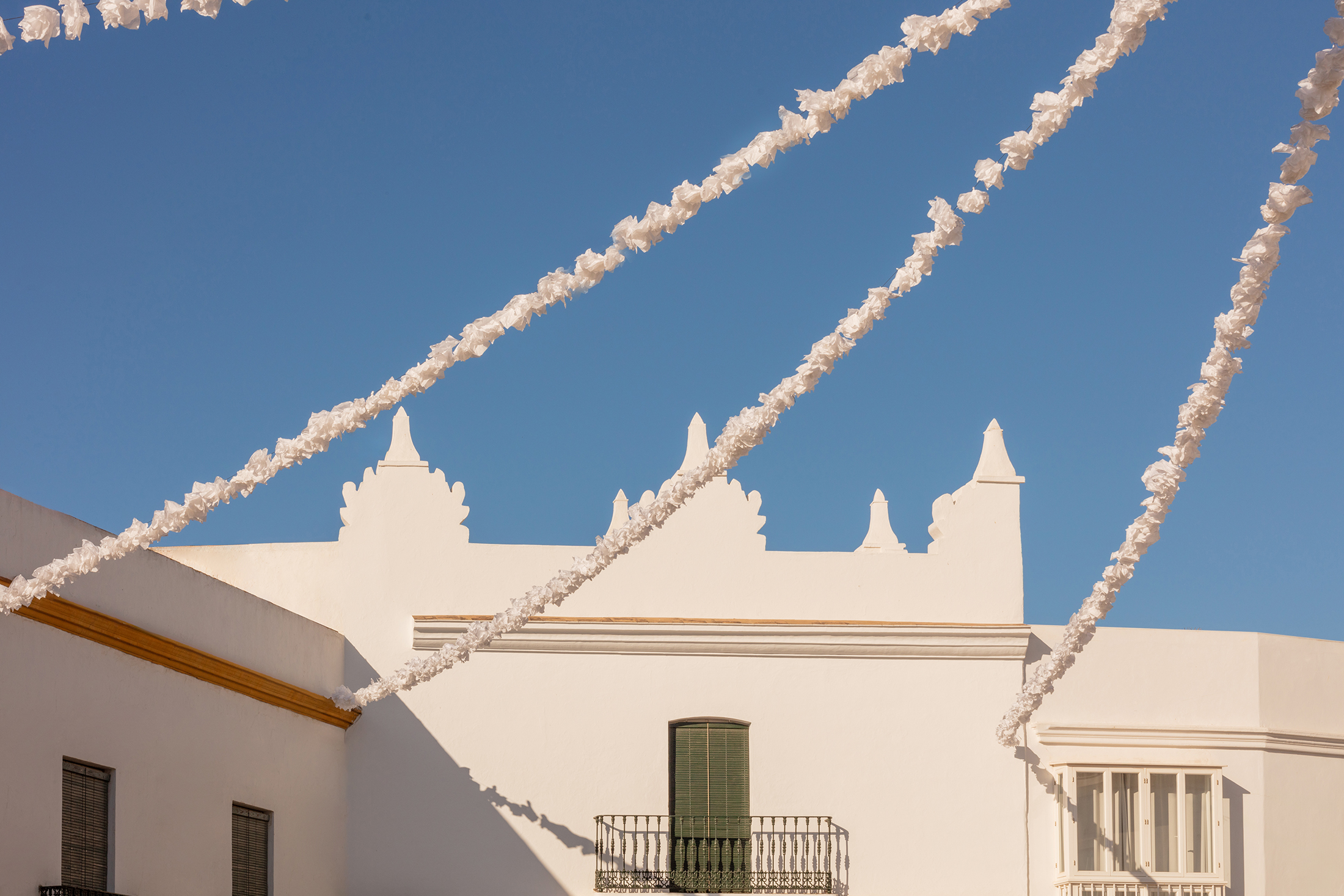
With mild weather throughout the year, life here is lived outdoors
Summer can be hot, but for most of the year, clear skies and mild weather shape daily life. I now welcome rainy days, because they are so few and far between.
It helps explain why Andalusia has thousands of outdoor celebrations and festivals throughout the year. Every few weeks, as I’m sitting in my living room, I’ll hear the faint sound of drums in the distance. I step out onto my balcony and see a parade approaching. Sometimes it’s a small procession for a local organization, other times a centuries-old tradition with a full band, people on horseback, and carts full of candy for children.
Here, celebration isn’t just for the holidays. It’s woven through every season.
What I Never Expected to Love
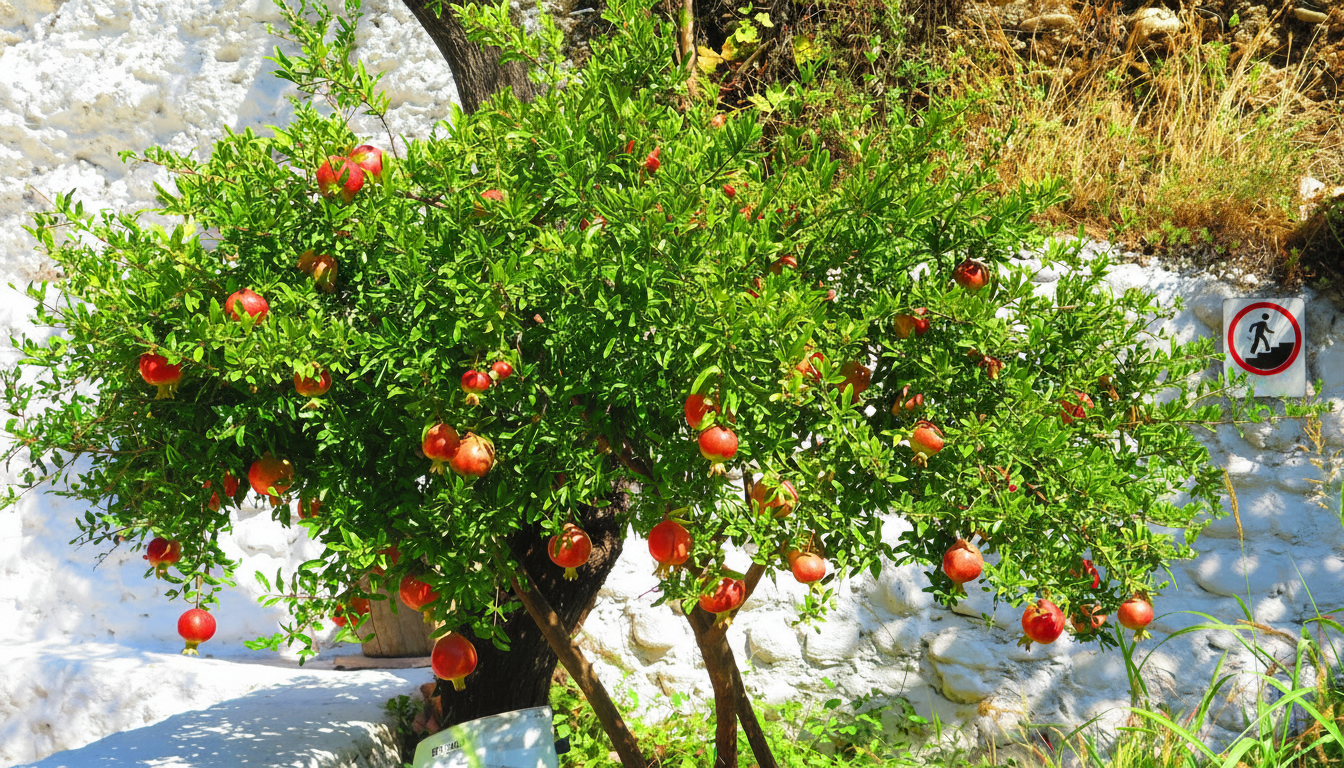
There are a few other aspects of living in Andalusia I never imagined would be a normal part of my life
Now I find myself not just getting used to them, but wondering how I lived so differently just a short time ago.
Eating fruit from trees. Due to the climate and the value placed on agriculture, fruit is everywhere! Just don’t let a local convince you to try the oranges from the street trees as they’re famously bitter, grown for marmalade rather than eating. If they offer you one, it’s a test. Don’t fail it.
Prioritizing Rest. Yes, siesta is a real thing. After lunch, it’s common, and even encouraged, to rest before getting back to your work day.
Hanging my clothes to dry. Because it’s so sunny and dry here, locals typically do not own dryers. They hang their clothes outside, something they’re genuinely proud of (“See, it dried in less than an hour!”). I never thought I could live without a dryer, but now, the simple act of hanging my clothes in the sun is calming and grounding, and it’s actually something I look forward to, even though it takes more time.
Rarely making plans. The New Yorker in me is still getting used to this one. Here it’s about waking up, having your breakfast and seeing where the day takes you.
The quieter sounds of daily life. Sitting in my NYC apartment, I used to hear sirens and honking. Now I hear church bells and the clatter of horse-drawn carriages.
Enjoying every moment. I moved here with no expectations, and what I’ve found is a way of life that feels calmer, more grounded, and deeply connected to the present.
My favorite expression locals use, and one you hear often, is “Tranquila, no pasa nada,” which literally translates to “nothing is happening,” but more closely means, “Relax, everything is fine.” And it really is.
Carly Duarte left Manhattan for life in Andalusia, founding Casera Collections to help others discover and call home this part of Spain.